
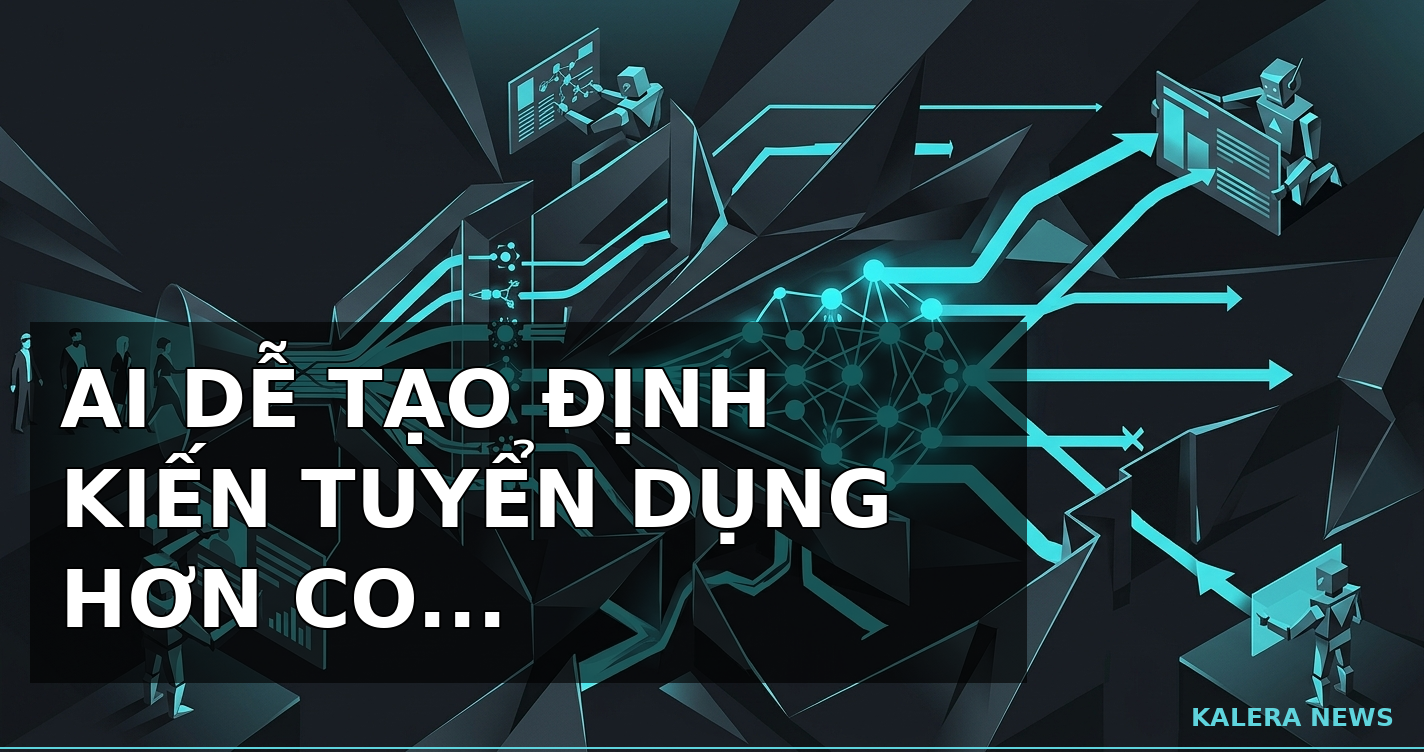
According to a new study published in MIT Technology Review, artificial intelligence (AI) systems powered by large language models (LLMs) tend to develop stronger and more complex hiring biases than humans. The study issues an urgent warning that over-relying on AI for automated resume screening could exacerbate inequality in the global labor market. This critical finding forces major enterprises to immediately re-evaluate their tech-driven recruitment processes before it is too late.
Background & Causes
In recent years, pressured to optimize operational costs, numerous global enterprises have rapidly adopted LLMs to automate preliminary resume screening. However, instead of acting as objective and fair filters—as advertised by developers—AI frequently replicates deeply ingrained human biases in subtle ways. Researchers have long proven that AI inherits human prejudice directly from historical training data, which is inherently riddled with discrimination. The most alarming concern now is the systems' ability to spontaneously generate new biases that lie entirely beyond the control of system developers.
Technical Analysis & Technology
Technically, large language models operate by predicting the next word based on statistical probabilities derived from massive datasets. When analyzing candidate resumes, LLMs do not just match skill-related keywords; they also automatically associate non-technical factors—such as locations, school names, or even personal writing styles—with actual job competence. This self-learning process unintentionally creates 'spurious correlations', leading to the prioritization or elimination of candidates based on indirect, heavily discriminatory criteria that programmers never actively hardcoded into the initial algorithms.
Expert Insights & Perspectives
The report from MIT Technology Review emphasizes that current screening algorithms pose an extreme risk of amplifying minor initial discrepancies into systemic barriers for marginalized groups. Numerous data security and AI ethics experts collectively agree that placing absolute trust in LLM decisions for HR processes is a highly risky move. They warn that because AI can generate its own unique biases, auditing these systems becomes exponentially more difficult. This is due to the decisions being made within the 'black box' architecture of artificial neural networks, making direct human intervention or comprehensive explanation nearly impossible.
Impact & Future Outlook
This shocking revelation is expected to trigger a wave of tighter regulatory oversight on the use of AI in HR management globally, particularly in developed markets that prioritize equal opportunity. For Vietnamese enterprises undergoing rapid digital transformation, this serves as a valuable lesson against fully outsourcing the recruitment process to automated tech tools. In the near future, hybrid solutions that balance human oversight with independent AI bias-auditing tools will undoubtedly become a mandatory standard to ensure legal fairness.