
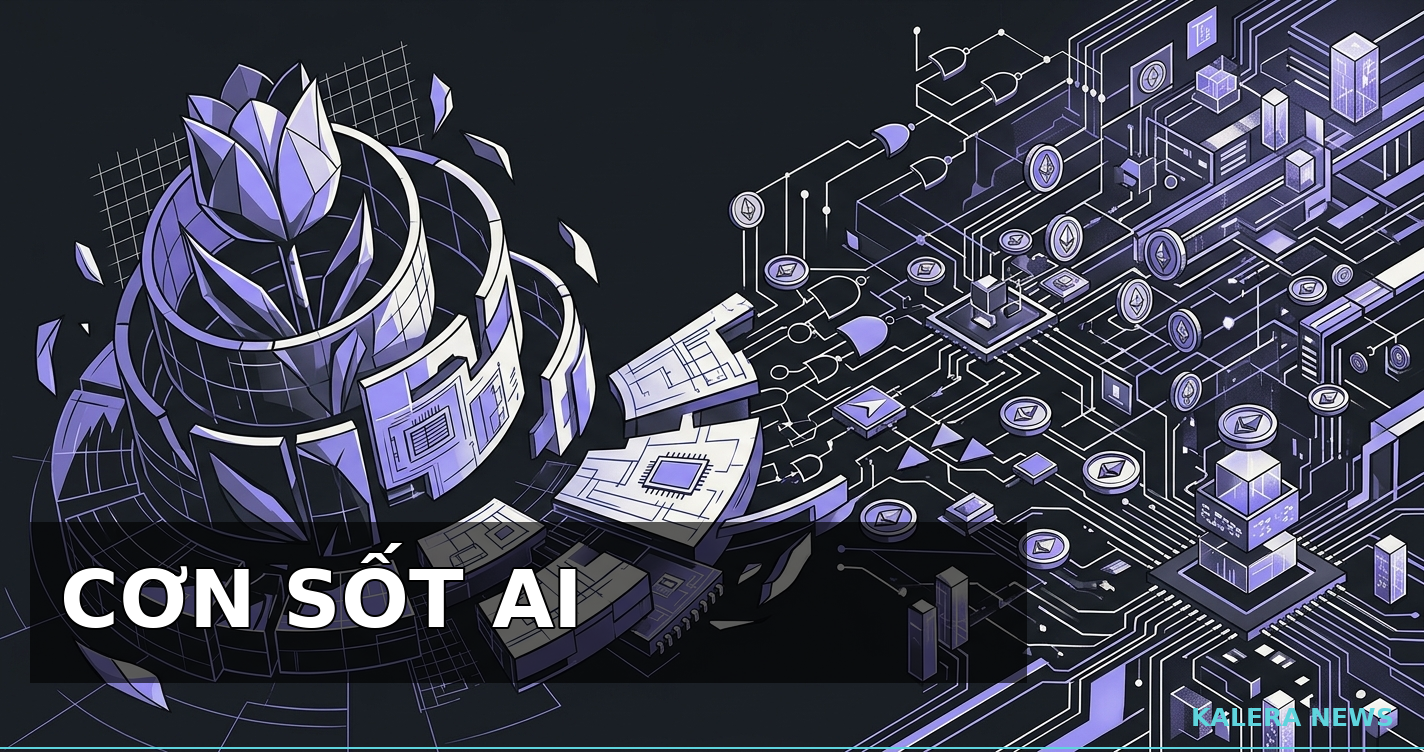
In the essay titled "Tools and Their Tools" recently discussed on Hacker News, author Sean Helvey provides sharp insights into the current wave of artificial intelligence development. He compares the AI token craze to the historic tulip mania of 17th-century Holland. The article raises major questions about the actual value of technology tools being created solely to serve other tools.
Background & Causes
Financial history has witnessed numerous speculative bubbles where capital poured into assets with inflated values. According to Sean Helvey, the current AI market is repeating this cycle as tech companies focus heavily on producing and consuming tokens. Instead of creating products that directly solve user needs, many startups are building complex intermediate software layers.
Venture capitalists continuously pump funds into this ecosystem hoping for quick returns. This has inadvertently created a new tech bubble, where company valuations are based on token consumption rather than actual revenue. The author warns that once venture funding dries up, the market will face a large-scale shakeout.
Technical & Technological Analysis
Delving into the technical aspects, the article analyzes the concept of "tools serving tools" in modern AI Agent architecture. Currently, large language models (LLMs) are often integrated into automated workflows where they must continuously call third-party APIs to process data. Consequently, a network of software wrappers has emerged, creating redundancy and inefficiency in system optimization.
Each of these intermediate steps not only increases latency but also consumes a massive amount of computing resources in the form of tokens. According to the author's analysis, building such intermediate tools primarily benefits cloud infrastructure and GPU providers. For end-users, these improvements have not yet delivered a significantly better experience compared to traditional software solutions.
Expert Opinions & Perspectives
On Hacker News, this topic has garnered significant interest from software developers and system engineers. Many agree that the industry is becoming saturated with AI products lacking true innovation. One veteran engineer shared that the line between a genuinely useful tool and a speculative product is being blurred by hype from founders.
However, some experts offer a more open perspective, suggesting that this is a necessary experimental phase for any emerging technology. They argue that building supplementary tools, even if currently clunky, will lay the groundwork for establishing standard communication protocols between AI systems in the future. The current chaos is merely a stepping stone before the market finds its equilibrium.
Impact & Future
The "token" mania will likely undergo a major correction similar to the Dot-com bubble of the early 2000s. Projects that rely solely on subsidized capital without sustainable business models will gradually be phased out. This will serve as a wake-up call for developers to refocus on the core value of their products.
For the tech community in Vietnam, this trend offers a profound lesson on optimizing operational costs and focusing on practical solutions. Instead of rushing to integrate AI into every feature indiscriminately, businesses should carefully weigh the economic efficiency against the actual user experience.