
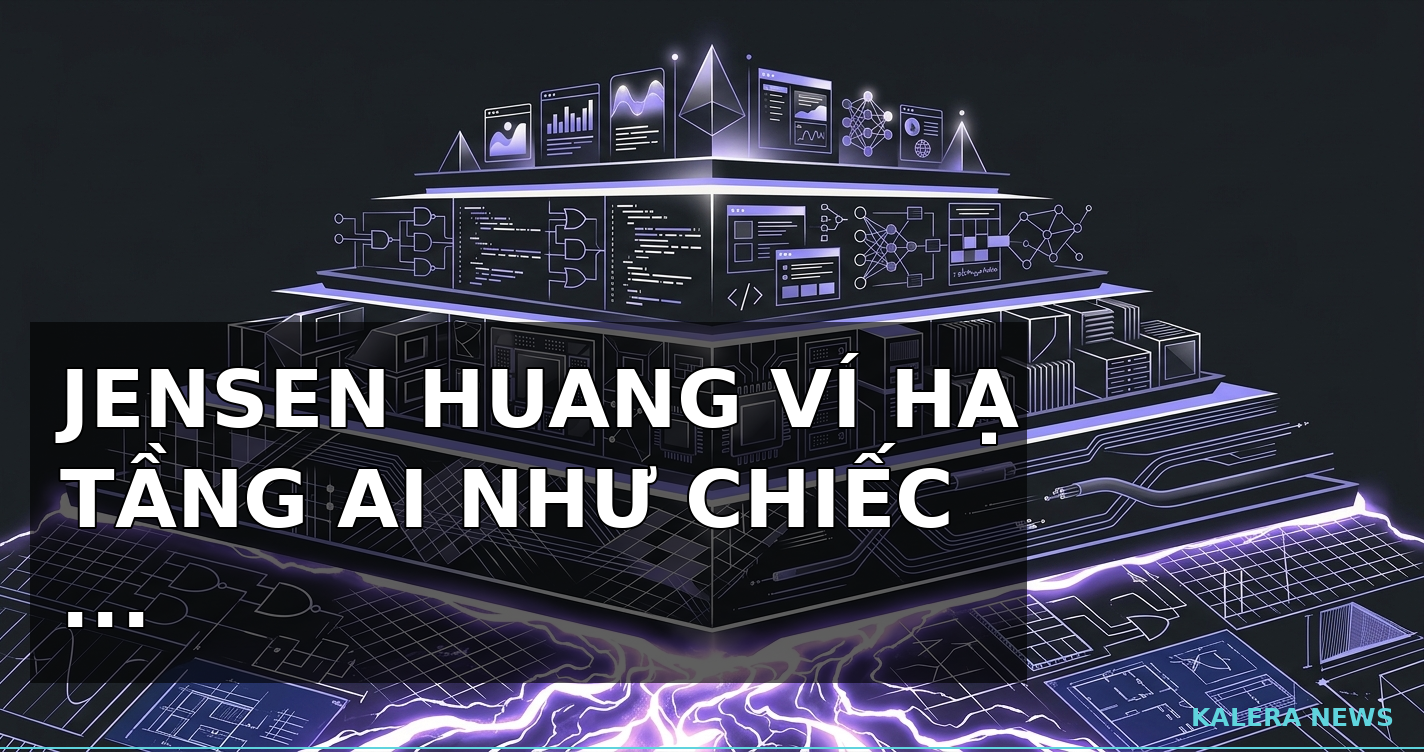
In a recent interview with venture capital firm Sequoia Capital, Nvidia CEO Jensen Huang offered a unique perspective by describing the entire artificial intelligence (AI) infrastructure system as a five-layer cake. Notably, at the very bottom of this infrastructure pyramid is not semiconductor chips or data centers, but the power supply itself.
Background & Drivers
The Nvidia chief's remarks come as the global race to develop large language models (LLMs) consumes massive amounts of electricity. Tech giants are scrambling to secure stable energy sources to power their supercomputers. Jensen Huang emphasized that every AI response users receive today actually begins with an electron, highlighting the critical importance of electricity in the digital era.
Technical Analysis & Technology
According to Huang's 'five-layer cake' model, the AI infrastructure is clearly structured from bottom to top. The foundation layer is energy, followed by semiconductors (such as GPUs), physical data centers, foundation models, and finally, end-user AI applications at the top. Placing energy at the base indicates that hardware performance optimization is no longer the sole factor determining the success of an AI system; rather, power transmission and grid management have become the primary technical bottlenecks that must be resolved.
Expert Insights & Perspectives
Many industry experts agree with Huang's view, noting that AI's reliance on physical power grids is putting unprecedented pressure on global energy infrastructure. Venture capital representatives also observe that future AI startups will not only compete on algorithms but will also face fierce competition to secure access to clean and stable energy sources.
Impact & Outlook
This insight forecasts a major shift where technology companies will have to invest directly in energy projects, including nuclear and renewable energy. For the Vietnamese tech community, this signals that sustainable AI development requires close coordination between national energy planning and digital infrastructure development.