
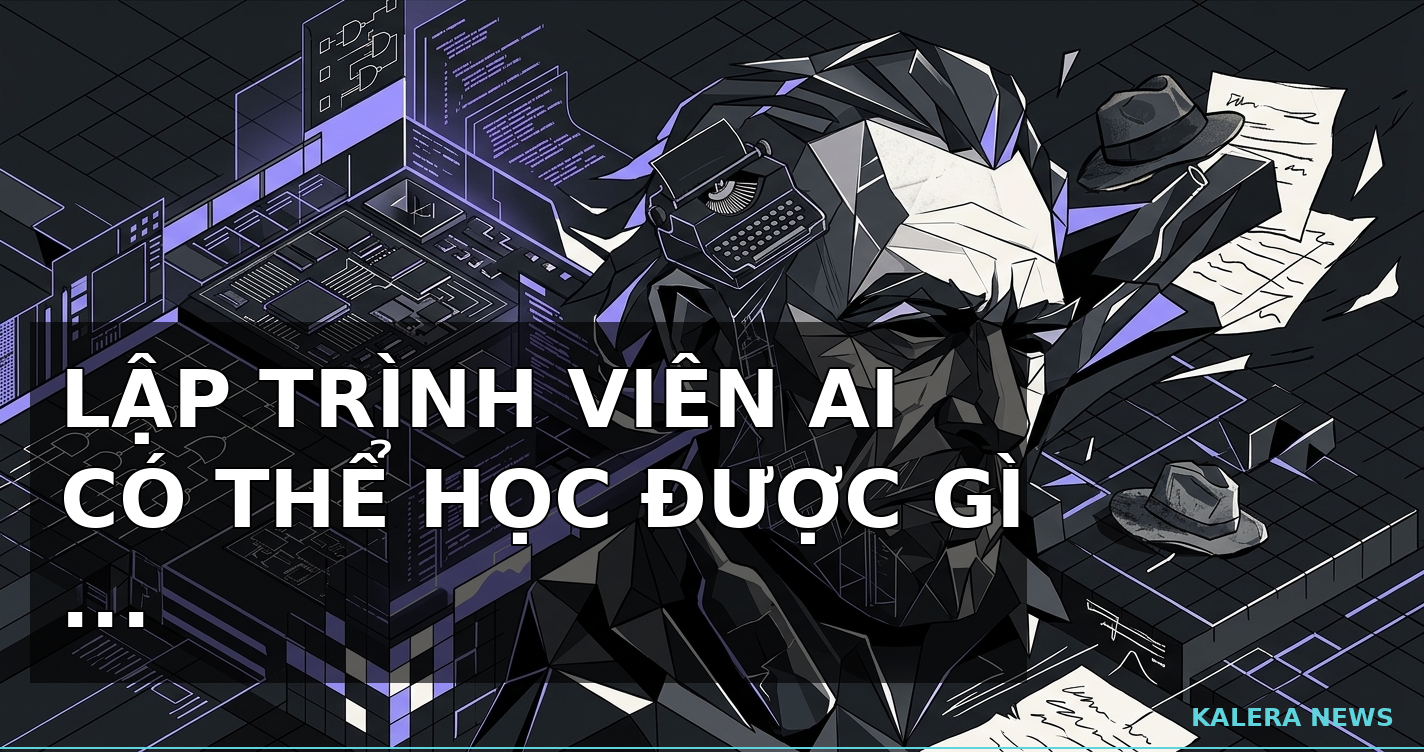
A post discussing the connection between the philosophy of writer Charles Bukowski and artificial intelligence (AI) development is garnering significant attention on the Hacker News community. This topic opens up profound lessons about authenticity, perseverance, and natural approaches in an era where AI source code is becoming increasingly complex. Applying literary thinking to software engineering offers a unique critical perspective amidst the current wave of tech hype.
Background & Context
Charles Bukowski is renowned for his raw, direct writing style and uncompromising philosophy of life, epitomized by his tombstone epitaph 'Don't Try'. In today's AI development landscape, developers often fall into the trap of over-engineering, constantly forcing Large Language Models (LLMs) to perform tasks beyond their natural capabilities. This forcing leads to hallucinations and unstable systems. The Hacker News post points out that forcing a system to perform with insufficient data or incorrect optimization is akin to forced writing.
Technical Analysis & Technology
Looking deeper into the technical aspects, the 'Don't Try' philosophy in AI development translates to simplifying system architecture and fine-tuning processes. Instead of building overly convoluted prompt chains or mindlessly cramming parameters, engineers should focus on cleaning raw datasets and naturally optimizing the loss function. When the foundational structure is set up correctly, machine learning models will automatically optimize performance without requiring heavy-handed interventions. This mirrors how Bukowski let his words flow naturally from real-world experience rather than trying to force-produce mainstream art.
Expert Opinions & Insights
On the Hacker News forum, many veteran software engineers agree that this minimalist mindset is critical in the era of Generative AI. One commenter noted: 'Most critical bugs in AI systems today do not stem from the algorithms themselves, but from developers attempting to impose too many rigid rules on a model that is inherently probabilistic.' Experts also note that patience and embracing failure—recurring themes in Bukowski's works—are mandatory qualities when training deep learning models, which require thousands of trial-and-error iterations.
Impact & Future Outlook
The trend of integrating artistic philosophy into computer science is expected to grow as the boundaries between engineering and creativity blur. For the Vietnamese tech community, Bukowski's lesson reminds young developers not to chase short-lived tech hypes but to focus on the core of the problem they are solving. Building lean, efficient, and practical AI solutions will deliver far more sustainable value than attempting to construct bloated systems that lack real-world utility.