
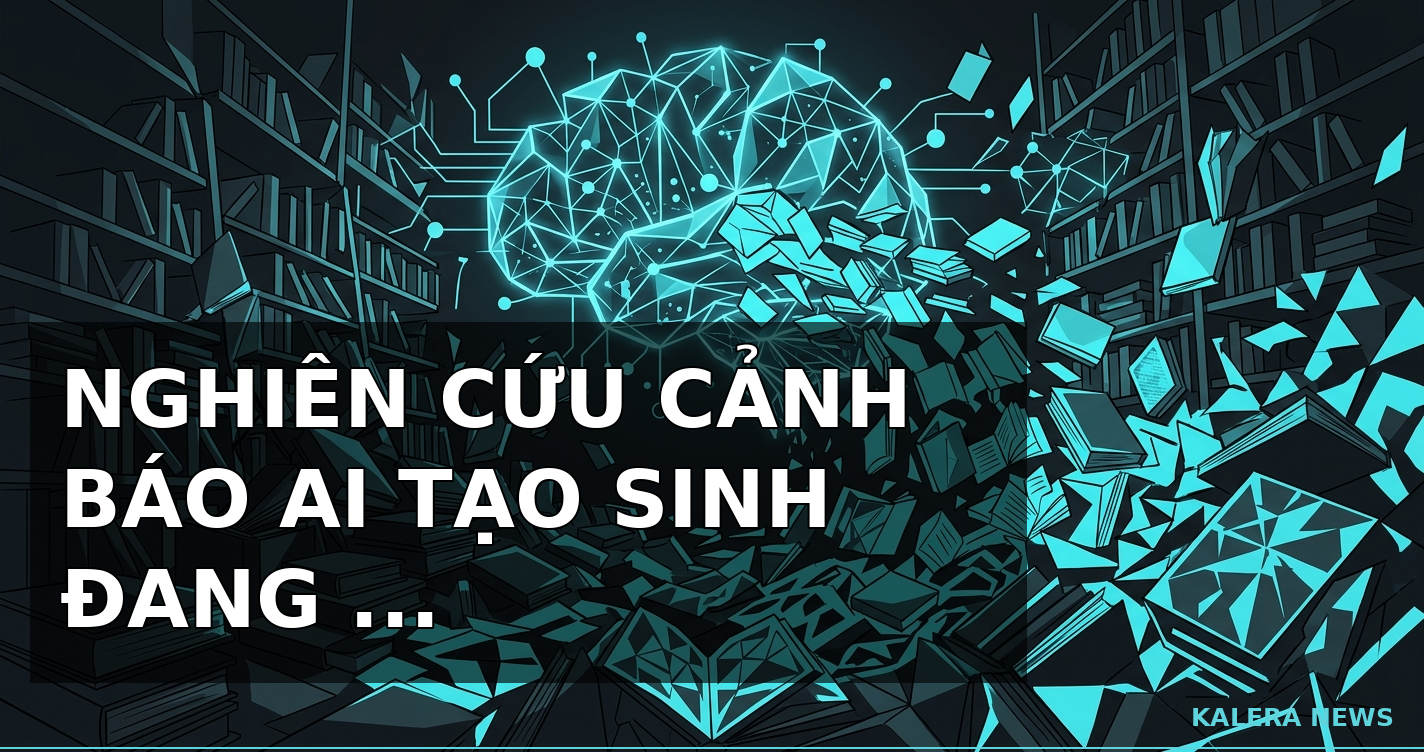
A new study published on the arXiv platform in early August 2026 has raised alarming warnings about the explosion of books automatically written by generative AI. The study, titled 'Generative AI floods and dilutes the market for books', points out that the emergence of large language model (LLM) tools is flooding digital publishing platforms, rapidly diluting the book market. The mass production of cheap, low-quality books is creating a massive barrier for both traditional authors and readers.
Background and Causes
Since large language models became mainstream, the barriers to entry in the publishing industry have been almost entirely eliminated. Anyone can use AI chatbots to write an entire book in just a few hours and then publish it directly to major self-publishing platforms like Amazon Kindle Direct Publishing (KDP). This has led to an unprecedented explosion in the number of new titles, though most of them contain generic, repetitive, and inaccurate content.
According to the research team's analysis, the deluge of AI-written books not only dilutes search channels but also chokes off opportunities for real writers to reach readers. Traditional authors, who spend months or years crafting a work of art, now face fierce competition for visibility against thousands of mass-produced AI books generated daily.
Technical Analysis and Technology
From a technological perspective, current generative AI systems utilize next-token prediction algorithms trained on massive datasets. Although capable of producing grammatically coherent text, they lack deep critical thinking, real-world life experience, and genuine artistic creativity. Consequently, AI-generated works tend to follow repetitive formulas, quickly becoming monotonous.
Furthermore, recommendation and search algorithms on many online bookstores are not currently designed to effectively distinguish between human-written and AI-generated books. This inadvertently allows automated accounts (bots) to optimize search engine listings with popular keywords, pushing AI books to the top of search results and misleading readers.
Expert Opinions and Insights
Many publishing industry experts express concern that the lack of effective quality filters will erode consumer trust in e-books. Unless major distribution platforms implement strict technical measures to label AI content or limit the number of uploads per account, this issue could destroy the independent publishing ecosystem.
Discussions within the Hacker News research community echo this sentiment, noting that this is a consequence of machine-generated content being optimized and consumed by machines, pushing humans to the margins of the creative ecosystem. Readers will find it increasingly difficult to discover works of genuine intellectual value amidst a vast ocean of artificial text.
Impact and the Future
In the future, this market dilution could force traditional publishers to tighten their vetting processes and drive a resurgence in physical print books as a mark of quality. For readers, developing critical evaluation skills and selecting books from reputable publishers will become more crucial than ever to avoid wasting time on low-quality works generated by AI models.