
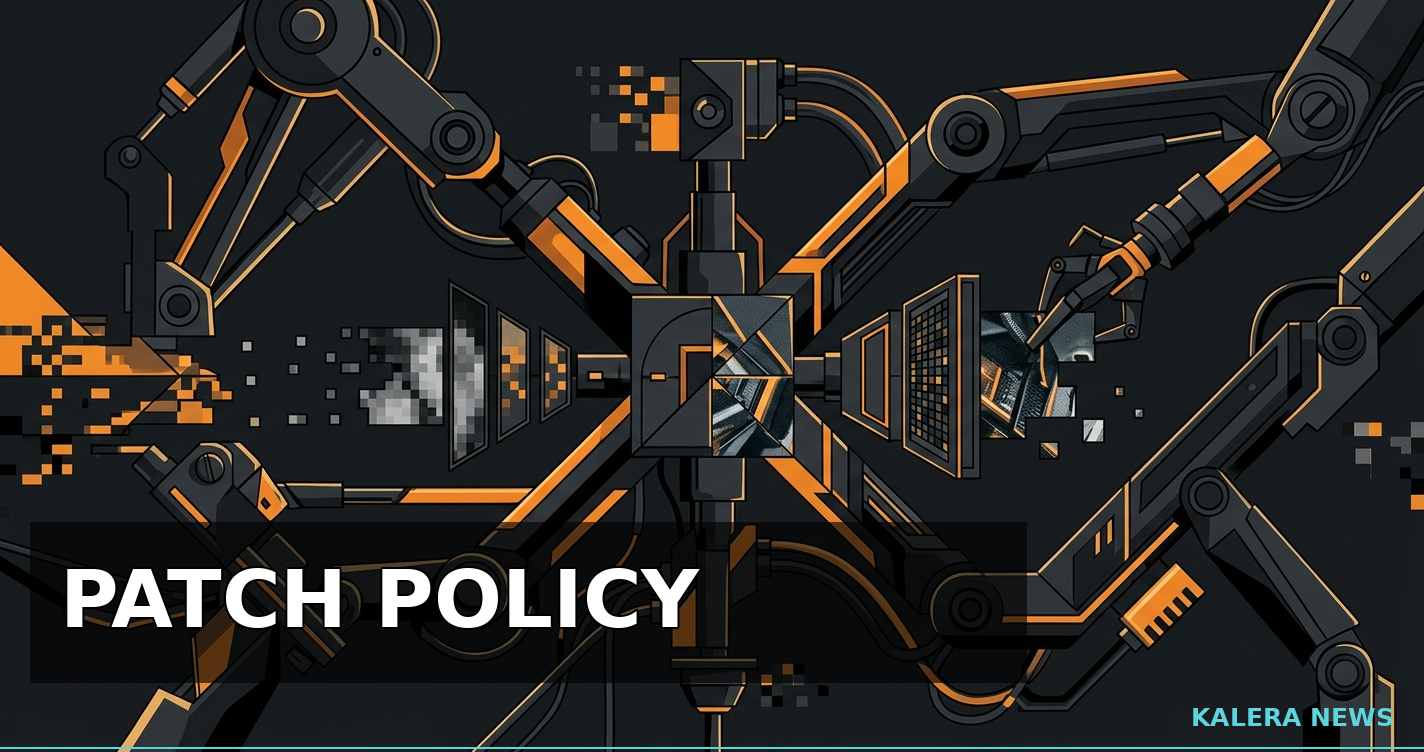
In July 2026, robotics and artificial intelligence researchers introduced 'Patch Policy', a minimalist architectural extension designed for Transformer-based control policies. This novel approach thoroughly addresses an inherent bottleneck in robotic computer vision systems: the loss of rich visual details when processing input data. The research was widely shared by renowned AI scientist Yann LeCun, drawing significant attention from the global tech research community.
Background & Motivation
In modern robot control systems, pre-trained Vision Transformer (ViT) models serve as the 'eyes' that help robots observe and understand their surroundings in a detailed, dense manner. However, a major paradox exists in most current architectures. To make action decisions, most traditional control policies pool the rich visual information from the ViTs into a single vector.
This pooling process inadvertently discards a large portion of the captured detailed data, causing the robot to lose the ability to perceive subtle environmental elements. According to researchers, this excessive information compression significantly limits the robot's ability to respond accurately in high-dexterity tasks, such as picking up small objects or navigating complex spaces.
Technical Analysis & Core Technology
To overcome this limitation, Patch Policy was developed as a minimalist yet highly effective architectural solution. Instead of compressing data through intermediate pooling steps, Patch Policy allows Transformer-based control policies to directly ingest and process dense tokens obtained from pre-trained ViTs.
Directly processing these tokens maintains the spatial structure and detailed features of the original image throughout the neural network's decision-making process. The robot does not just see the overall picture; it also understands the position, boundaries, and surface characteristics of each small pixel region. Consequently, the data flow from vision to action remains seamless and highly optimized, eliminating intermediate steps that cause information loss.
Expert Insights & Perspectives
The concept behind Patch Policy has received positive feedback from experts due to its practicality and streamlined design. Yann LeCun's sharing of this research, developed by Gaoyue Zhou, highlights the importance of optimizing information transmission efficiency in neural networks for robotics.
Many AI experts note that shifting from traditional vector pooling mechanisms to direct token processing is an inevitable step. This method does not require a complete redesign of massive existing vision models. Instead, it only requires integrating a lightweight extension module, which significantly saves training costs and computational resources for robot control software developers.
Impact & Future Outlook
The introduction of Patch Policy promises to drive a new generation of smarter robots capable of performing sophisticated physical manipulations with high precision. For robotics engineers and businesses in Vietnam and globally, this solution opens up opportunities to optimize existing robot models without heavy investments in expensive hardware.
In the near future, we can expect the emergence of service robots, industrial robots, and medical surgical assistants that can interact more smoothly and naturally with their surroundings by fully leveraging every pixel of information from the real world.