
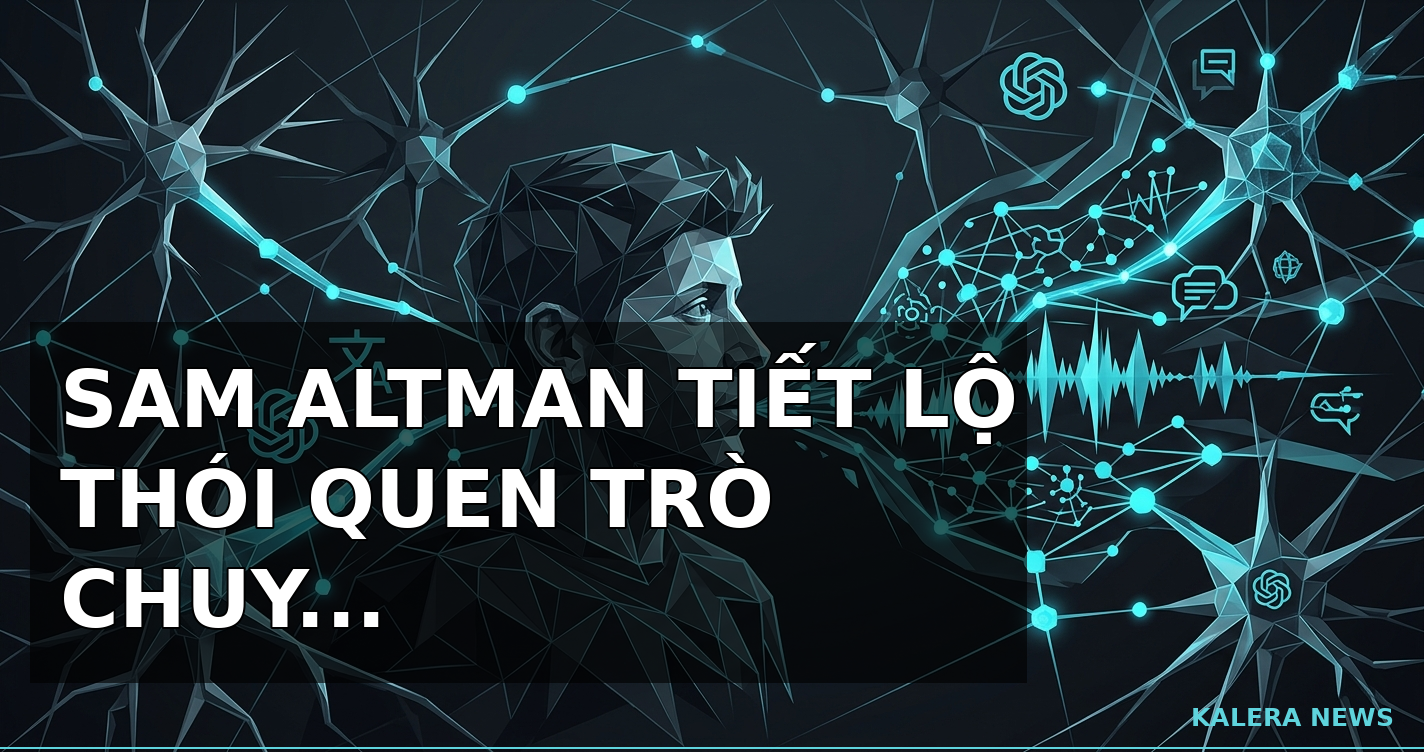
OpenAI CEO Sam Altman has revealed a notable shift in his personal usage habits, stating that he now interacts with ChatGPT via voice more than traditional typing. According to Altman's direct sharing, OpenAI's new voice model has truly crossed a technological threshold, delivering an unprecedented level of natural communication. This statement quickly captured the attention of the tech community as AI virtual assistants race to upgrade real-time interaction capabilities.
Background & Origin
For years, text prompting has remained the dominant method of interaction between users and Large Language Models (LLMs). Although speech-to-text features have existed for a long time, they often suffered from high latency and robotic tones. The arrival of next-generation multimodal interaction models has completely shifted this landscape, making conversations with AI as seamless as human-to-human dialogue.
Technical & Technology Analysis
To achieve what Altman calls "crossing a threshold," OpenAI's new voice model is designed to process audio signals directly without intermediate text conversion. This architecture minimizes response latency, allowing the AI to detect tone, emotion, and even pauses in breathing. Native multimodal processing is the technical key that enables the system to comprehend and respond almost instantly.
Expert Opinions & Remarks
While Altman's statement represents the personal habits of a tech executive, observers note this is a strong signal that OpenAI is preparing for a wider rollout of advanced voice interaction features. However, some tech experts express healthy skepticism, advising users to wait for large-scale public testing to evaluate whether the model can maintain stability and data privacy when continuously processing massive amounts of audio data.
Impact & Future
The transition from text to voice-based communication promises to unlock entirely new human-computer interaction paradigms. For global users, once this technology is fully optimized across various languages, it will lower the barrier of entry for the elderly or those with typing difficulties. This trend shapes a future where AI assistants act as true companions, ready to listen and respond with natural voices across daily tasks.