
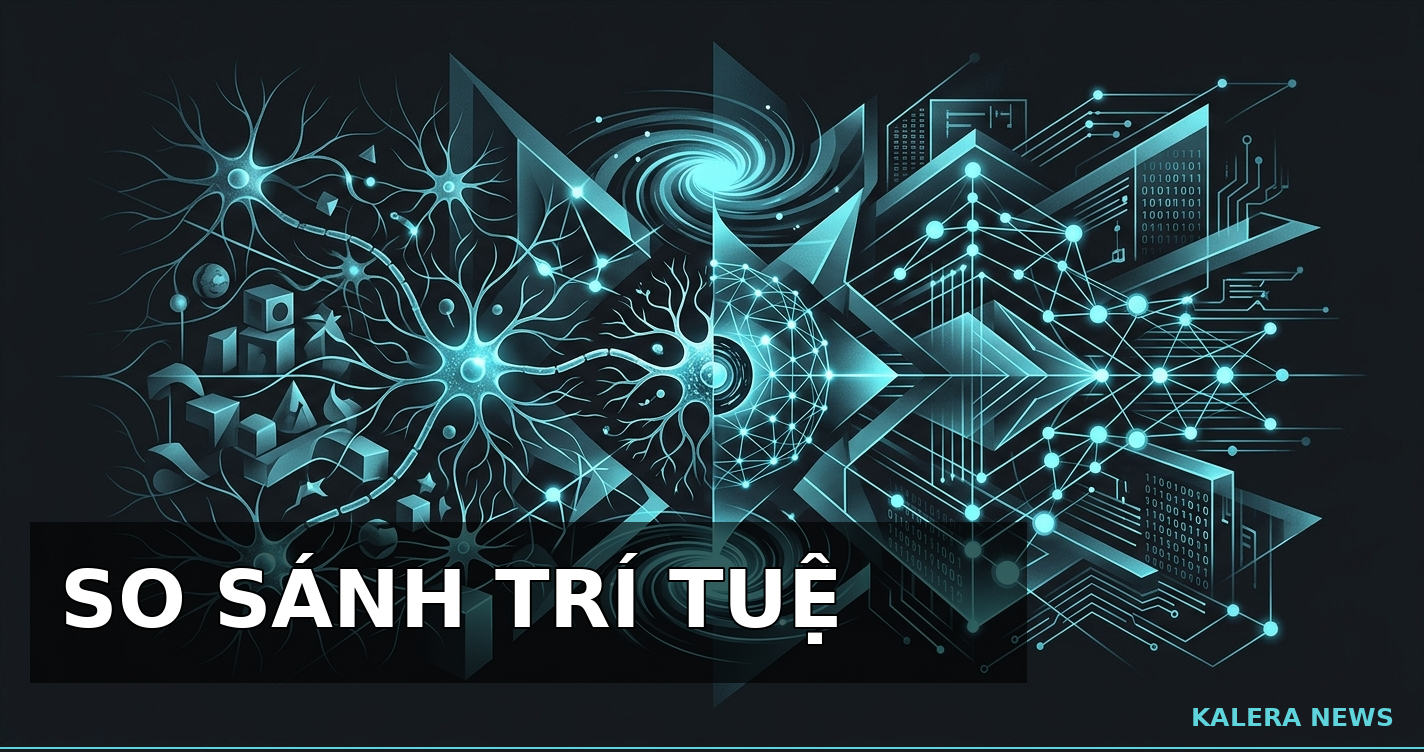
Microsoft recently hosted an in-depth panel discussion comparing the cognitive capabilities of a curious three-year-old child to today's most advanced artificial intelligence (AI) models. The panel featured prominent AI researchers Subutai Ahmad and Nicolò Fusi, alongside Microsoft Corporate Vice President Doug Burger. This discussion represents the latest effort to accurately map where modern AI systems stand on the universal spectrum of natural intelligence.
Key Discussion Points
The dialogue centered on analyzing how humans acquire information and process the surrounding world compared to machines. While a three-year-old child can learn autonomously through direct interaction, curious exploration, and questioning their environment, current AI models remain heavily dependent on massive, pre-curated datasets. The experts raised a fundamental question about whether our current definition of 'intelligence' is truly fair when applied to both biological and digital entities.
Technical Analysis & Technology
From a technical standpoint, state-of-the-art (SOTA) AI models rely on deep artificial neural network architectures, optimizing billions of parameters to predict the next data pattern. Conversely, a three-year-old's brain operates on highly efficient unsupervised learning mechanisms, requiring very few examples (few-shot learning) to grasp a new concept. This fundamental architectural discrepancy is the greatest barrier preventing current AI from achieving adaptive and flexible Artificial General Intelligence (AGI).
Expert Insights & Perspectives
According to researchers Subutai Ahmad and Nicolò Fusi, the essence of cognition goes far beyond basic language processing or image recognition. Doug Burger of Microsoft also emphasized that accurately assessing AI's position on the intelligence spectrum will help engineers design safer, more practical systems, avoiding the overhyping of the actual capabilities of today's large language models.
Impact & Future Outlook
This discussion opens up a new path for the AI research community in Vietnam and globally to focus on biologically-inspired machine learning methods (such as neuromorphic computing). Instead of merely scaling up model sizes and computational resources, understanding how a child thinks could be the key to building more energy-efficient and intelligent generations of AI in the.