
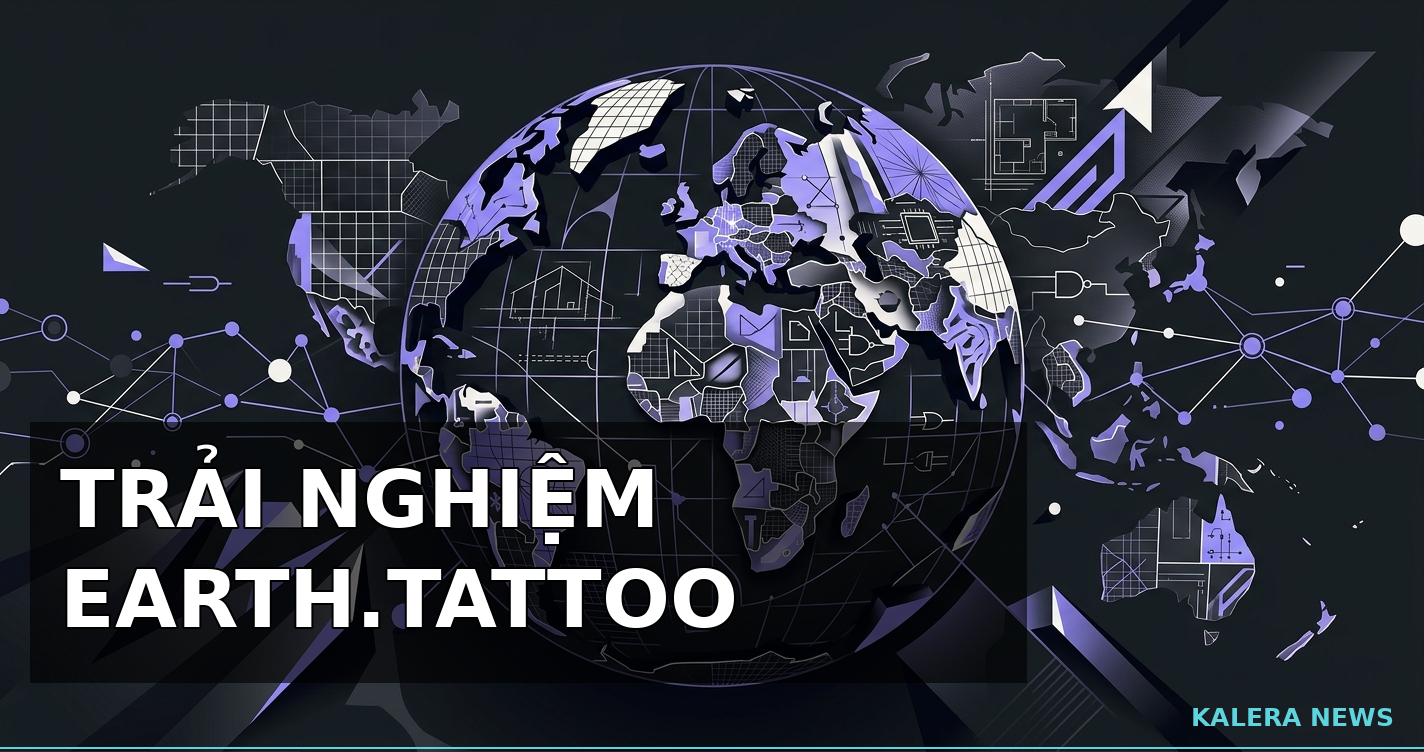
A real-time interactive art project called Earth.tattoo was recently introduced to the tech community, allowing users from all over the world to draw and create collaboratively on a virtual 3D globe. This is a real-time collaborative art platform where each individual brushstroke instantly appears and is visible to all other viewers globally.
Key Events
Shortly after appearing on the Hacker News tech forum, the project attracted significant attention from developers and digital art enthusiasts. Users visiting the website can select various colors to interact directly with the simulated surface of the Earth. This collaboration is completely anonymous and does not require complex account registrations, simplifying the overall user experience.
Technical & Architectural Breakdown
According to preliminary details from the project, the system utilizes advanced WebGL graphics libraries to render the 3D map of the Earth directly in web browsers without needing additional plug-ins. Synchronizing brushstroke coordinates in real time among thousands of concurrent users requires a highly optimized WebSockets server architecture, ensuring the lowest latency to provide a smooth interactive feel.
Expert Analysis & Community Sentiment
Many members of the tech forums highly praised Earth.tattoo's minimalist yet creative nature. Some feedback suggested that the developer should implement content filters or moderation tools to prevent users from drawing offensive images—a classic challenge for any open community-drawing platform.
Future Outlook & Industry Impact
The project offers a fascinating look at how technology connects people through borderless visual art. Even as a recreational experiment, Earth.tattoo's real-time data processing architecture could be applied to more complex interactive mapping projects in the future, ranging from geography education to global climate data simulation models.