
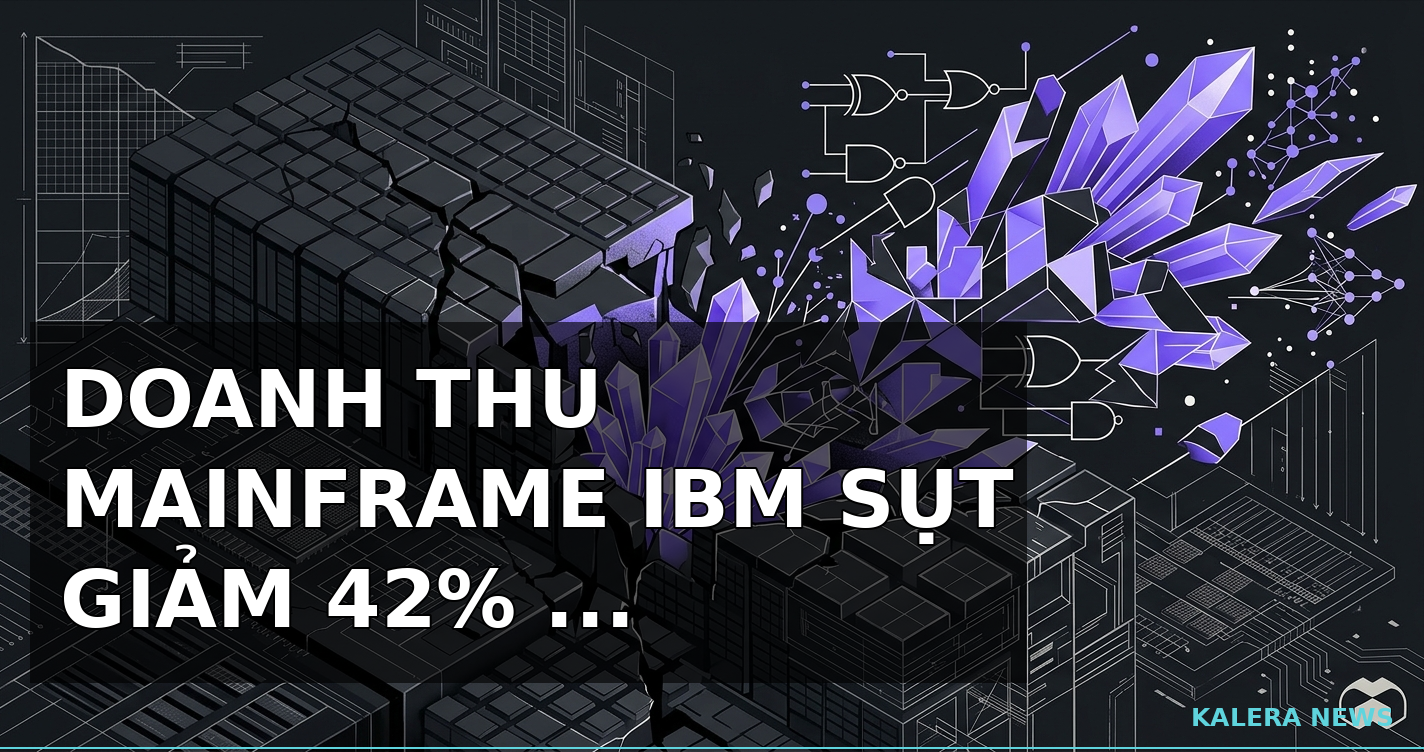
IBM's recently released Q2 2026 earnings report recorded worse-than-expected financial results, leading to a historic 25% single-day stock plunge. Although the 115-year-old tech giant still generated massive cash flow with $17.2 billion in revenue, its core mainframe business plummeted by 42%. According to TechCrunch, the direct cause of this decline stems from enterprise clients shifting their budgets to cope with the ongoing AI boom.
Bối cảnh & Nguyên nhân
Prior to releasing the official report, IBM CEO Arvind Krishna and the board took the unprecedented step of sending an early warning letter to investors. This warning about dismal revenue in the hardware infrastructure category immediately triggered a massive sell-off on the stock market. The severe decline in the mainframe segment has caused a cascading effect on overall results, as IBM's business model heavily relies on selling software bundled with hardware. According to CFO Jim Kavanaugh, for every $1 of mainframe hardware sold, IBM generates up to $3 in related software revenue.
Phân tích kỹ thuật & Công nghệ
The underlying reason why enterprises delayed upgrading their mainframe systems was not that they abandoned the platform, but rather because the costs of other data center hardware skyrocketed. The global wave of building AI infrastructure has driven up the prices of semiconductor components and memory (RAM, storage), forcing server and PC manufacturers like Dell and HP to raise their prices by 15% to 30%. To offset these sudden cost increases and maintain urgent AI projects, dozens of major IBM customers decided to temporarily postpone purchasing new mainframe generations, which cost from hundreds of thousands to millions of dollars per system.
Ý kiến chuyên gia & Nhận định
Despite facing one of its worst financial quarters in years, IBM's leadership insists this is only a temporary blip. CEO Arvind Krishna stated there is "no evidence of clients moving off the mainframe." He explained that budgets were only temporarily delayed, and some of the postponed deals from last quarter have already been successfully signed early this quarter. Observers note that legacy mainframe systems still serve as the backbone for major banks and financial institutions due to their security and high-volume transaction processing capabilities, which standard cloud servers cannot yet fully replace.
Tác động & Tương lai
This incident at IBM highlights a paradoxical aspect of the artificial intelligence boom: the massive capital flowing into AI is indirectly choking budgets for other traditional IT infrastructures. For the global tech market and enterprise IT planners, this serves as a clear lesson in supply chain risk management and budget allocation in the AI era. The tech industry has predicted the "death of the mainframe" for decades, but this legacy platform continues to prove its resilience and will likely coexist alongside modern AI systems in the near future.