
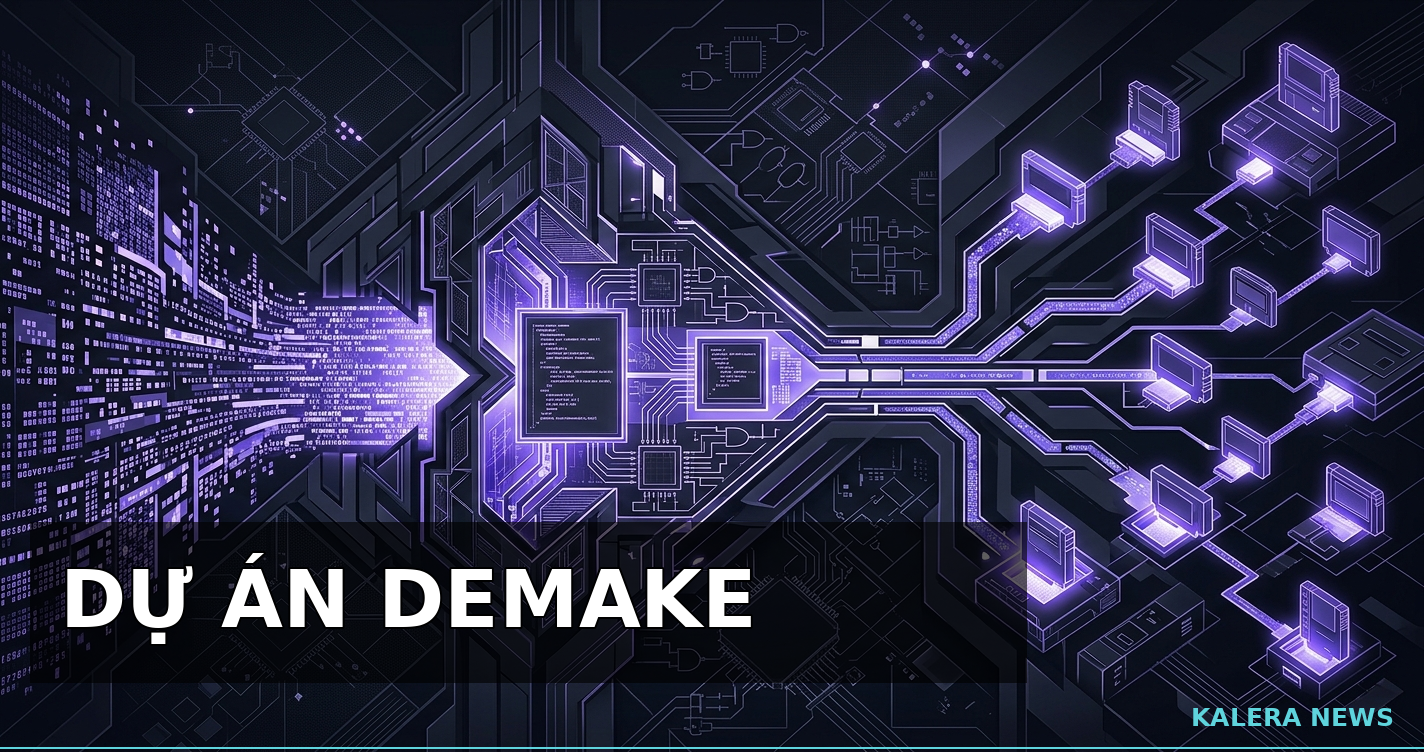
Recently debuted on Hacker News, the open-source project named 'demake' is garnering significant attention from the retro game development community. This tool introduces a unique solution: allowing users to write source code just once and then directly compile it into ROM files compatible with multiple classic gaming consoles. This is seen as an exciting step forward for those passionate about software development on the constrained hardware of the 1980s and 1990s.
Background & Motivation
Programming games for retro consoles like the NES, Game Boy, or Sega Genesis has always been an incredibly daunting challenge. Each console possesses a completely different hardware architecture, from the microprocessor (such as the NES's MOS Technology 6502 versus the Game Boy's Zilog Z80) to memory management and picture processing units (PPUs). Porting a game from one system to another typically requires developers to rewrite almost the entire source code in a specific assembly language. Recognizing this barrier, the demake project was born to simplify the process by building a shared hardware abstraction layer.
Technical Analysis & Technology
The technical core of demake lies in its multi-target compilation capability from a single high-level language. According to its introduction on Hacker News, the tool acts as an intermediate compiler, parsing the developer's source code and optimizing it for the extremely limited resources of each target console. The system automatically handles complex tasks such as memory mapping, color palette conversion, and CPU performance optimization for specific instruction set architectures. As a result, a simple game can run smoothly on both a CRT-connected NES and a monochrome Game Boy screen without requiring manual modifications to the original source code.
Expert Opinions & Insights
The emergence of demake has sparked lively discussions on Hacker News. Many developers expressed a healthy skepticism about the project's feasibility when applied to more complex games. Some pointed out that excessive hardware abstraction could reduce the maximum performance a retro console can achieve, given that each system relies on highly specific hardware hacks. Nevertheless, most experts agree that demake is an excellent tool for rapid prototyping and education, making the art of classic game development more accessible to a new generation of programmers.
Impact & Future Outlook
Although still in its early stages of development, the demake project opens up a promising new direction for the retro game preservation and creation community. The tool not only lowers the technical barrier for independent developers but also contributes to preserving and recreating the aesthetic style of the golden age of video games. In the future, if demake expands support to more complex 16-bit systems, it will undoubtedly become an indispensable platform in the toolkit of indie game developers worldwide.