
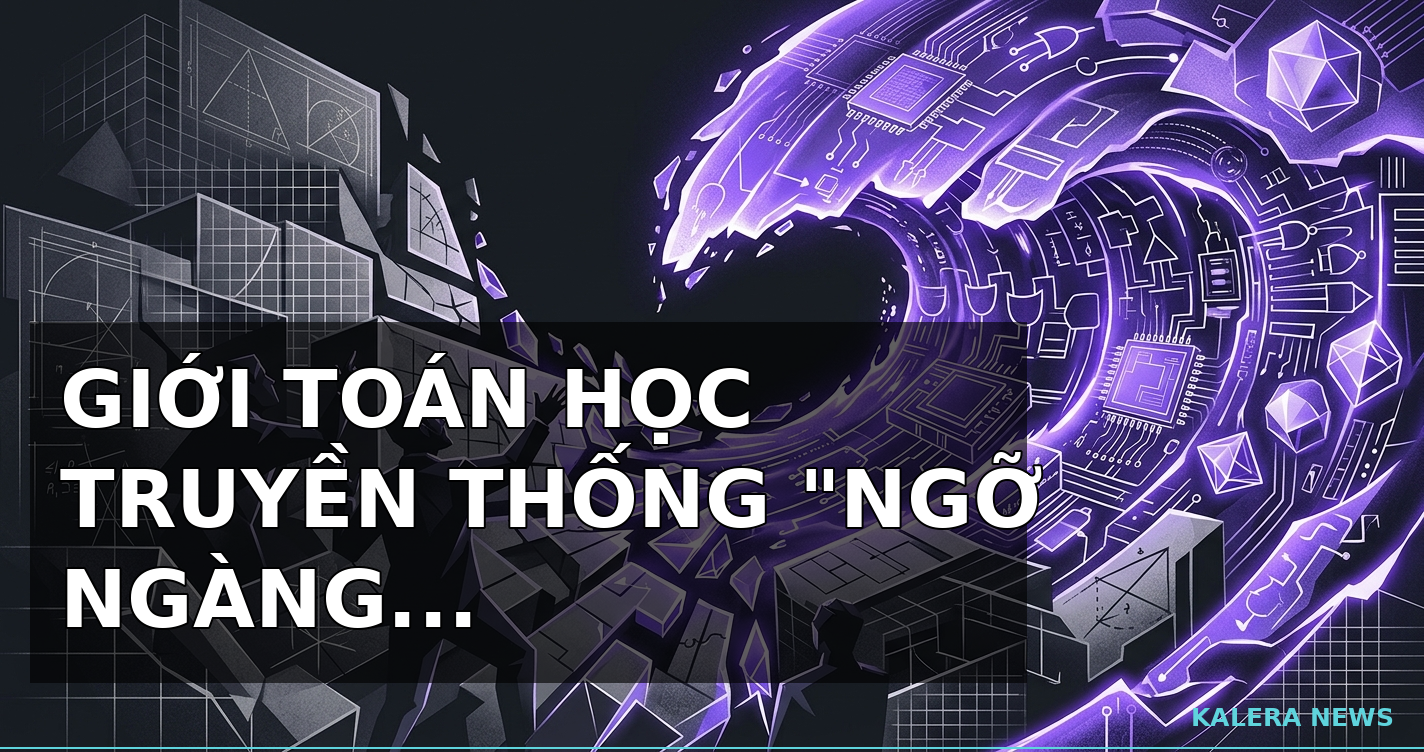
A heated debate recently erupted across the tech and academic communities following a Hacker News post referencing insights from researcher Daniel Lemire. The post highlighted that many traditional mathematicians are feeling genuinely 'shocked' by landmark shifts in the field. The rapid rise of automated theorem-proving systems and artificial intelligence (AI) is raising existential questions about the future of pure mathematical research.
Background & Core Causes
For centuries, mathematics has been regarded as a sanctuary of independent human logical thought, where major theorems are proven through years of painstaking contemplation. However, the emergence of modern proof assistant languages alongside advanced AI models is disrupting this traditional workflow. According to Hacker News, many veteran mathematicians are expressing deep anxiety as computer tools begin to heavily intervene and replace their core role in discovering new proofs. They fear that the identity, intuitive thinking, and depth of traditional mathematics will gradually fade as machines take over complex computational steps.
Technical & Technological Analysis
Technologically, this shift is driven by two core elements: formal proof assistants and generative AI. Specialized programming tools allow abstract mathematical arguments to be standardized into source code, which computers can verify with absolute certainty without human intervention. Additionally, modern machine learning models, leveraging advanced deep learning architectures, are beginning to automatically propose highly complex intermediate proof steps. The combination of rigorous computer verification and AI's conjectural capabilities is forging an entirely new research methodology, eliminating the logical errors commonly found in handwritten human drafts.
Expert Opinions & Insights
Lively discussions on online forums point out that the pushback from some mathematicians is not merely conservatism, but stems from a fear of losing the inherent 'artistic beauty' of the discipline. Some experts note that when mathematics becomes mechanized, humans can easily verify a theorem's validity via computer, yet lose a deep, fundamental understanding of why it is true. Conversely, tech advocates argue that computers are simply tools liberating humans from repetitive tasks, allowing them to focus entirely on macro-level, groundbreaking ideas.
Impact & The Future
Looking ahead, the boundary between pure mathematics and computer science is blurring faster than ever. For the tech and education communities, this trend opens up massive opportunities to democratize access to advanced mathematics through automation platforms. However, the global academic community, including Vietnam, must adapt quickly by integrating formal programming skills into traditional math curricula. This preparation is mandatory for a new era, where human-AI collaboration will be the ultimate key to solving the most daunting scientific challenges.