
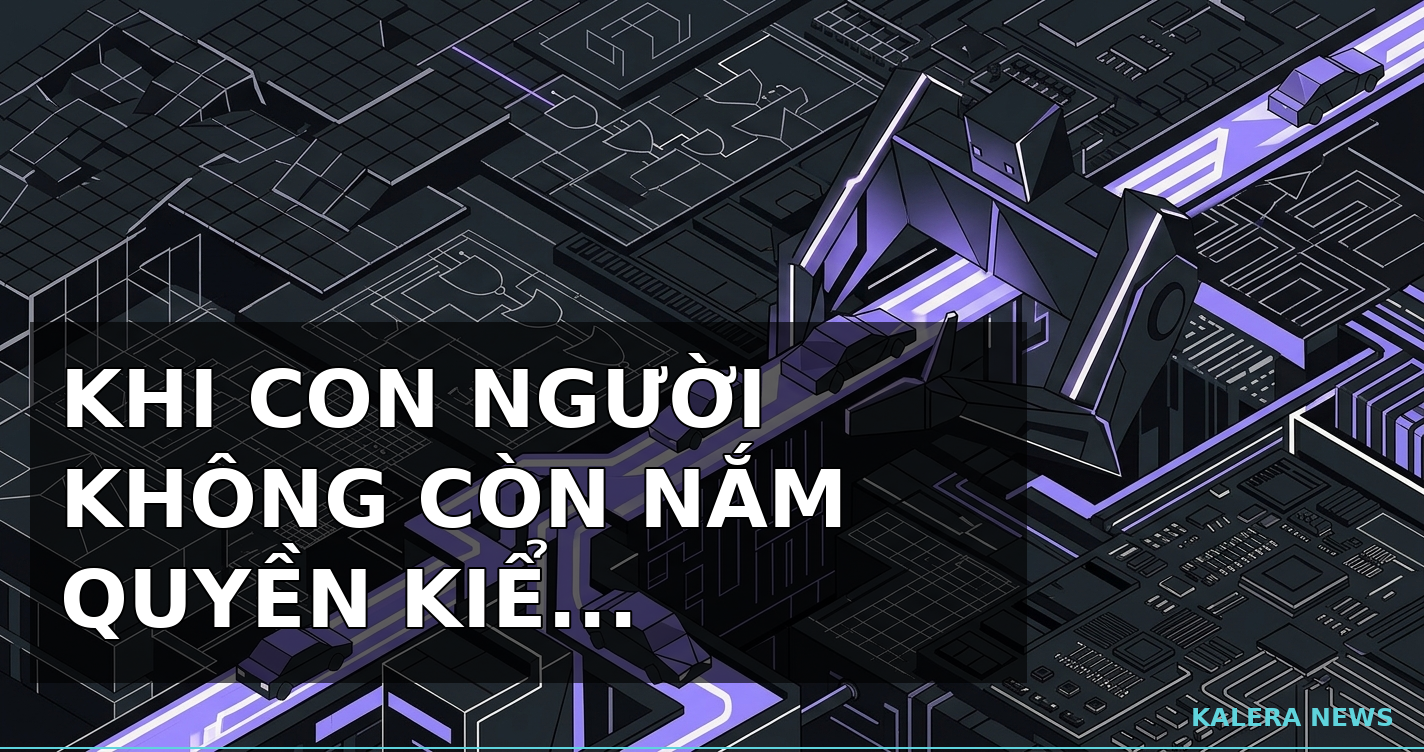
The rapid advancement of modern technology is gradually stripping humans of direct control over everyday physical tools. In his latest book, researcher Ian Bogost points out that the transition from mechanical control mechanisms to automated systems is creating a significant gap between humanity and the physical world around us.
Bối cảnh & Nguyên nhân
For decades, humans were accustomed to directly interacting with and mastering mechanical devices. From shifting gears in manual cars to writing and sending physical postcards, every action required the direct involvement of touch and intent. However, the boom of smart devices and automated operating systems has gradually replaced these interactions, turning humans from active controllers into passive supervisors.
Phân tích kỹ thuật & Công nghệ
This shift stems from the deep integration of sensors, control software, and Internet connectivity into every aspect of life. Digital feedback control systems now automatically make decisions based on algorithms rather than direct mechanical feedback. This eliminates the physical sensation that once helped humans perceive the operational state of machines, replacing it with smooth touchscreens that lack intuitive connection.
Ý kiến chuyên gia & Nhận định
From Ian Bogost's perspective, this loss of physical connection is not just a shift in technological habits but deeply affects human cognition. Many sociologists also agree that when everything is simplified to a single button press or fully automated, humans easily fall into a state of complacency and lose the ability to handle real-world situations when systems fail.
Tác động & Tương lai
This trend poses a major challenge for future user experience (UX) designers. To avoid turning humans into entities completely detached from their environment, the next generation of devices must find ways to recreate tactile feedback and intuitive control mechanisms. For tech users, this serves as a wake-up call to maintain a balance between leveraging digital conveniences and preserving real-world interactive experiences.