
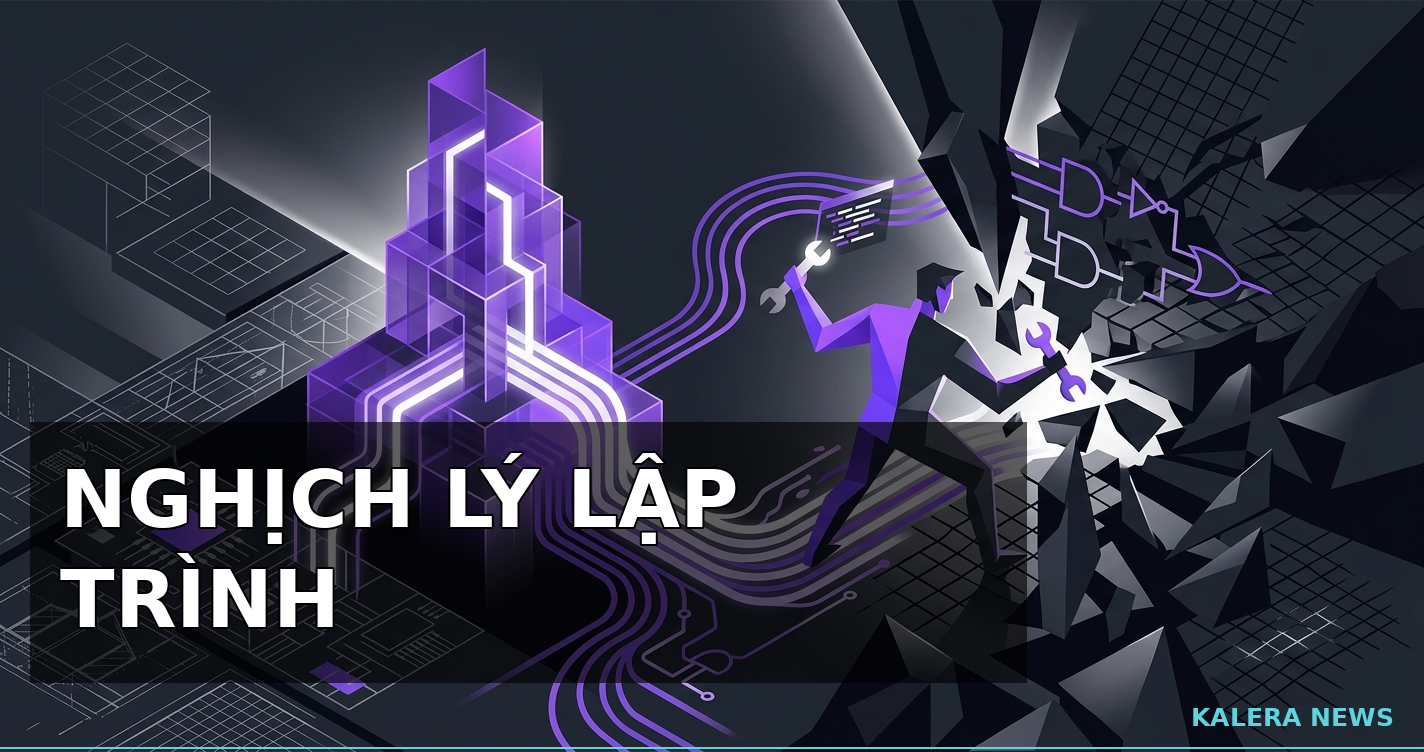
Hacker News recently featured an insightful analysis from ZhenFund, posing a classic yet highly relevant question: 'Why is programming both incredibly captivating and deeply painful?'. The topic quickly caught the attention of the global engineering community, reigniting deep discussions about the unique psychological experiences of coders. This is not merely a philosophical question, but a direct reflection of the day-to-day reality for millions of developers in the digital age.
Background & Core Drivers
According to the analysis by ZhenFund, the allure of programming stems from the 'flow state'—a psychological phenomenon where an individual is fully immersed in solving a logical problem. When writing code, developers act as the 'supreme architects' of a virtual world, where they establish and enforce every rule. This sense of absolute control, combined with instant feedback from the compiler, triggers a powerful dopamine loop. Conversely, the 'pain' comes from the uncompromising nature of computers, where a single misplaced semicolon can bring down an entire system built with meticulous effort.
Technical & Architectural Challenges
From a technical standpoint, the complexity of abstraction layers in modern software architecture is a primary driver of frustration. Today's software systems rarely operate in isolation; instead, they rely on hundreds of third-party libraries, APIs, and virtualized environments. Developers do not just battle their own logic; they must also manage dependency conflicts and the unpredictable behaviors of complex software ecosystems. Debugging often consumes far more time than writing new code, requiring intense, reverse-analytical thinking. Furthermore, while the rise of AI-assisted tools like GitHub Copilot and Large Language Models (LLMs) accelerates coding speed, it also introduces a new layer of abstraction. This can lead to hard-to-detect, silent bugs that demand even more rigorous testing workflows.
Expert Insights & Perspectives
Many veteran engineers on Hacker News agree that programming is essentially a continuous confrontation with failure for the sake of a single moment of triumph. Developers point out that the line between excitement and burnout in this industry is incredibly thin. 'Programming is like playing an endless puzzle game where the rules change at every level,' one software engineer shared. Behavioral psychologists also note that maintaining high-intensity focus on impersonal logical symbols for hours can easily lead to cognitive fatigue, causing frustration to escalate quickly when obstacles arise.
Future Outlook & Impact
Looking ahead, as the role of developers shifts from manual coding to system design and oversight with AI assistance, this paradox is expected to evolve into new forms. Tech enthusiasts and young developers in Vietnam need to equip themselves not only with technical expertise but also with emotional regulation skills to cope with these unique pressures. Understanding the psychological feedback loops of programming will help developers sustain their passion while establishing healthy boundaries to prevent burnout in an era of hyper-digitalization.