
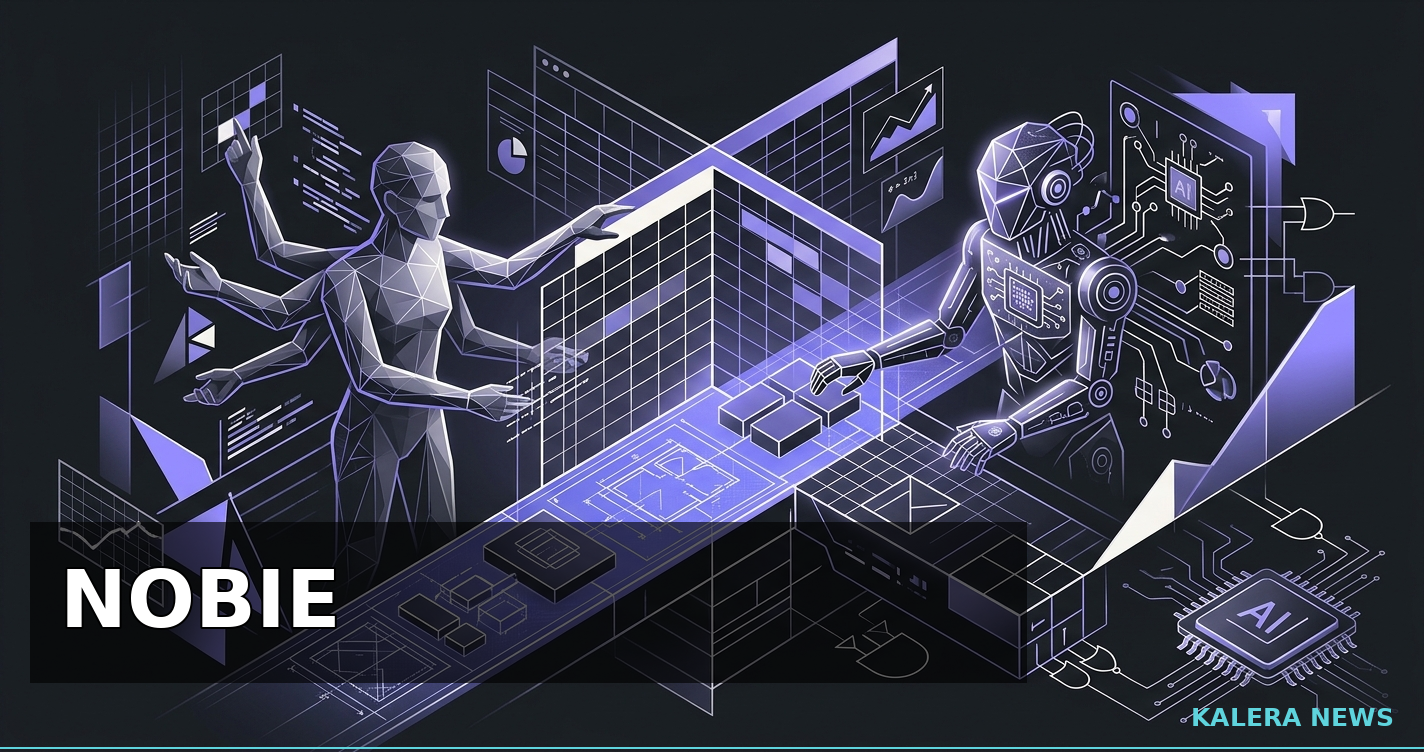
The Nobie platform has officially introduced a new runtime compatible with Excel format, aiming to optimize workflows between AI agents and humans. This solution promises to solve the spreadsheet processing challenges that current large language models face. By providing a direct execution environment, the system allows both developers and AI agents to interact smoothly with traditional .xlsx files.
Detailed Developments
Nobie's appearance on the Hacker News community quickly gathered attention from the tech world as businesses look for ways to automate business processes. Previously, enabling AI to read, understand, and write data into complex Excel spreadsheets often required developers to write extensive custom code or go through error-prone intermediate APIs. Nobie addresses this by providing a lightweight runtime that can be embedded directly into AI agent workflows, allowing them to operate like a real Excel user.
Technical & Technology Analysis
Technically, Nobie's runtime is designed to be backward-compatible with Microsoft Excel's specific formulas, formatting, and data structures. Instead of converting files to JSON or CSV formats which strips away hidden formula links, Nobie allows AI agents to access and calculate directly on the spreadsheet. This ensures data integrity and preserves the pre-existing financial or accounting logic established within corporate Excel files.
Expert Opinions & Insights
Many developers on tech forums note that Nobie's approach is highly practical. Choosing Excel as a common interface between humans and machines minimizes the barrier to AI adoption in enterprises. However, some voices also warn that further testing is needed regarding processing performance when dealing with massive datasets containing millions of rows, as well as security when granting AI agents deep access to core formulas.
Impact & Future
This tool opens up great prospects for building professional AI assistants in finance, logistics, and HR in regions like Vietnam where Excel remains dominant. In the future, the boundary between traditional programming and interacting with AI via spreadsheets will become increasingly blurred, helping businesses significantly optimize operating costs.