
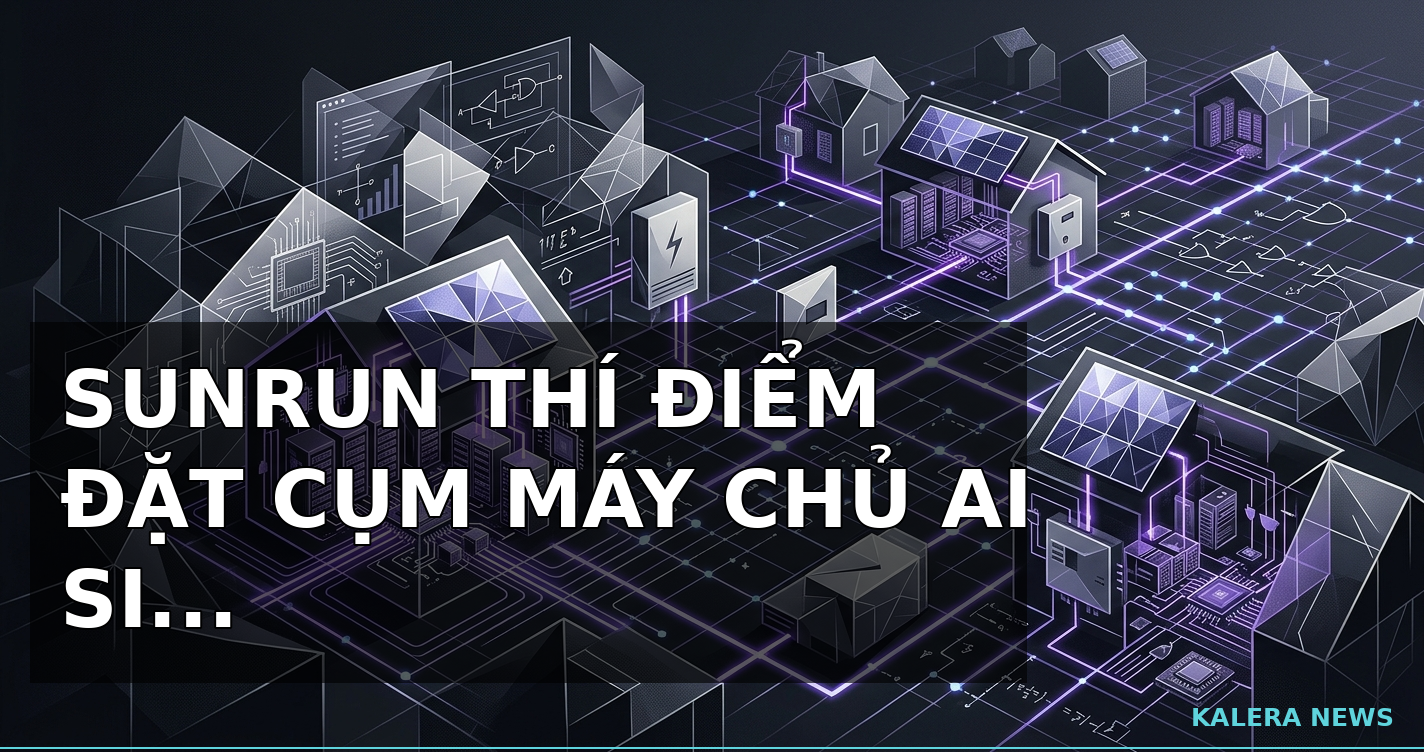
The solar and home energy storage company Sunrun has announced plans to expand into the artificial intelligence data center sector through a unique approach. Instead of building large-scale centralized infrastructure, the company is launching a pilot program called "distributed AI compute." Under this initiative, Sunrun will pay its customers to host compute nodes directly inside their homes.
Detailed Developments
According to a report by The Verge, Sunrun's new pilot program aims to utilize the space and power available in households already equipped with the company's solar and energy storage systems. By distributing these micro-server clusters to thousands of homes, Sunrun hopes to alleviate the burden on centralized power grids, which are currently strained by the global AI boom. Participating customers will receive recurring compensation from Sunrun, effectively turning their homes into part of a decentralized cloud computing network.
Technical & Technology Analysis
The core concept behind Sunrun's system is to maximize the utilization of local clean energy to power AI processing tasks. The residential compute nodes will connect via high-speed internet to receive and execute compatible AI workloads, returning the processed results to the central system. This integration requires smart home energy management systems to optimize power distribution between solar panels, backup batteries, and the AI hardware without disrupting daily household activities.
Expert Opinions & Outlook
While the concept is highly innovative, many technology and energy experts remain skeptical about its long-term viability. Managing heat dissipation and noise from computing hardware running continuously in a residential environment presents significant challenges. Furthermore, data security concerns regarding sensitive AI computations processed on decentralized, home-based devices must be thoroughly addressed with strict protection mechanisms.
Impact & Future
If Sunrun's pilot proves successful, this model could establish a new paradigm for the green data center industry. It would not only reduce the need for massive dedicated power plants for AI but also create a new source of passive income for early adopters of renewable energy. For emerging tech markets exploring both rooftop solar and AI adoption, this distributed computing model offers a highly valuable reference for future infrastructure planning.