
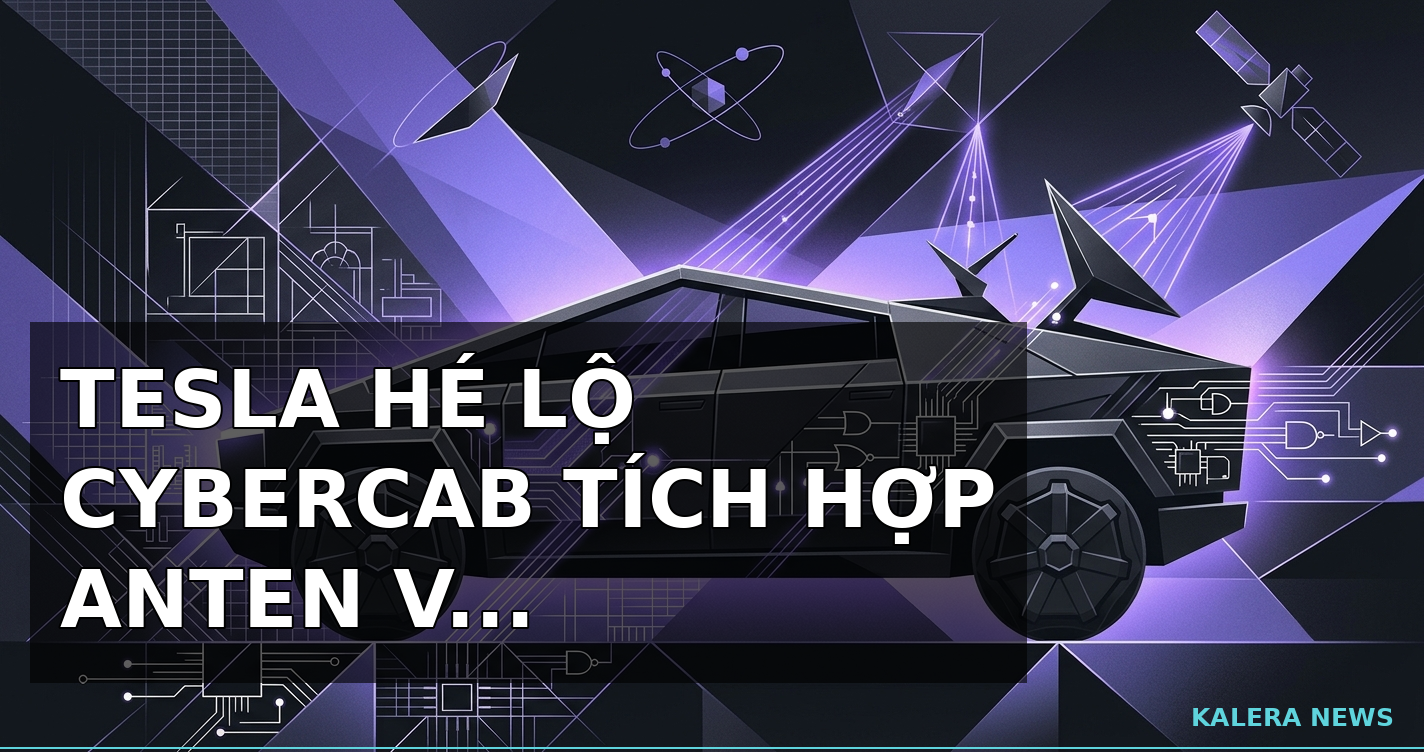
Tesla has officially unveiled the design of its next-generation Cybercab autonomous vehicle, drawing significant attention with its integrated SpaceX Starlink V5 satellite dish. According to Engadget, this move signals the electric vehicle manufacturer's ambition to ensure continuous broadband internet connectivity for its fully self-driving fleet, even in remote areas lacking terrestrial cellular coverage.
Background & Strategic Intent
While equipping vehicles with direct satellite connectivity is not entirely new, integrating the Starlink V5 into an urban robotaxi like the Cybercab opens up several strategic pathways. With 5G cellular infrastructure still plagued by dead zones and unable to guarantee absolute low latency across all terrains, satellite connectivity serves as the perfect failover. Elon Musk, CEO of both Tesla and SpaceX, has long sought to optimize the technological synergy between the two companies. This collaboration addresses the challenge of maintaining the massive data streams required for the Full Self-Driving (FSD) ecosystem to operate reliably and continuously 24/7.
Technical Analysis & Technology
Technologically, the Starlink V5 antenna is believed to feature an ultra-thin design and superior transceiver performance compared to previous generations. This dish is seamlessly integrated into the roof or chassis of the Cybercab to optimize aerodynamics, minimizing air resistance during transit. The Starlink V5 utilizes a next-generation passive electronically scanned phased array technology, allowing it to track signals from low Earth orbit (LEO) satellites with ultra-low latency. This enables the Cybercab to not only download high-resolution navigation maps in real-time but also transmit telemetry data and live camera feeds back to the operations center for processing during emergencies.
Expert Opinions & Outlook
Tech analysts view Tesla's move with a degree of pragmatic skepticism. Some experts from smart transportation research institutes argue that while satellite connectivity offers theoretical peace of mind, the equipment installation costs and Starlink subscription fees could drive up the Cybercab's operating costs—contradicting the 'affordable robotaxi' promise previously made by the company. Furthermore, maintaining stable connections in 'urban canyons' dominated by skyscrapers remains a significant technical challenge for any satellite transceiver system, requiring Tesla to prove real-world efficacy rather than relying solely on promotional claims.
Impact & Future Prospects
In the long run, this integration could redefine connectivity standards for the global autonomous vehicle industry. If successful, the Cybercab could operate not only in major metropolitan areas but also expand its services to suburbs, remote eco-tourism destinations, or interstate routes with poor telecommunications infrastructure. For the tech community in Vietnam, the fusion of autonomous driving technology and LEO satellite internet paints a future where geographical barriers are gradually dismantled, driving the trend toward smart transportation infrastructure built on seamless, borderless connectivity in the near future.