
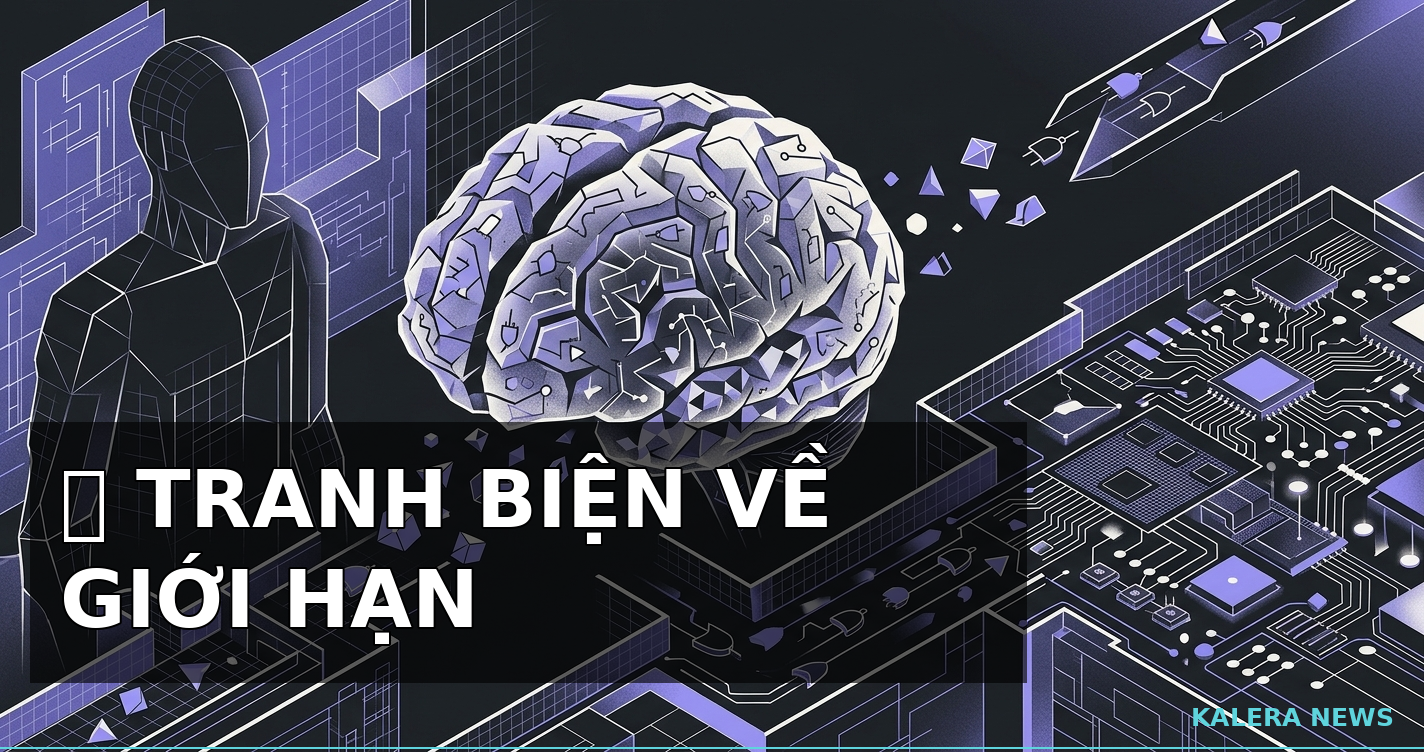
Artificial intelligence (AI) is rapidly shifting from an assistive tool to executing complex cognitive tasks on behalf of humans. This trend is sparking intense debate within the tech community regarding the boundary between optimizing productivity and eroding natural, independent thinking capabilities.
Key Developments
The wave of Generative AI and Large Language Model (LLM) adoption has deeply penetrated every aspect of daily life, from writing and programming to complex data analysis. Instead of using AI as an assistant to verify information, many users tend to delegate the entire reasoning process to machines. This creates a dependent user base that passively accepts AI outputs without applying personal critical filters.
Technical Analysis
From a technical standpoint, modern machine learning models are optimized to deliver highly persuasive and linguistically fluent answers. However, the nature of LLMs remains the probabilistic prediction of the next word based on massive training datasets, rather than possessing true logical reasoning or real-world contextual understanding. Confusing linguistic fluency with genuine reasoning capacity leads users to blindly trust algorithmically generated recommendations.
Expert Perspectives
Many educators and cognitive scientists warn that intellectual passivity will weaken the critical thinking and problem-solving skills of younger generations. When algorithms are always ready to provide instant answers, the process of self-exploration, trial and error, and experiential learning—which is core to human intellectual development—is gradually being eliminated.
Outlook & Future Impact
Over-reliance on AI could foster a future where humans lose independent creativity and become susceptible to biases embedded within the datasets of big tech companies. For Vietnamese users, striking a balance between effectively leveraging AI and actively cultivating critical thinking will be key to avoiding falling behind or becoming entirely dependent on machines.