
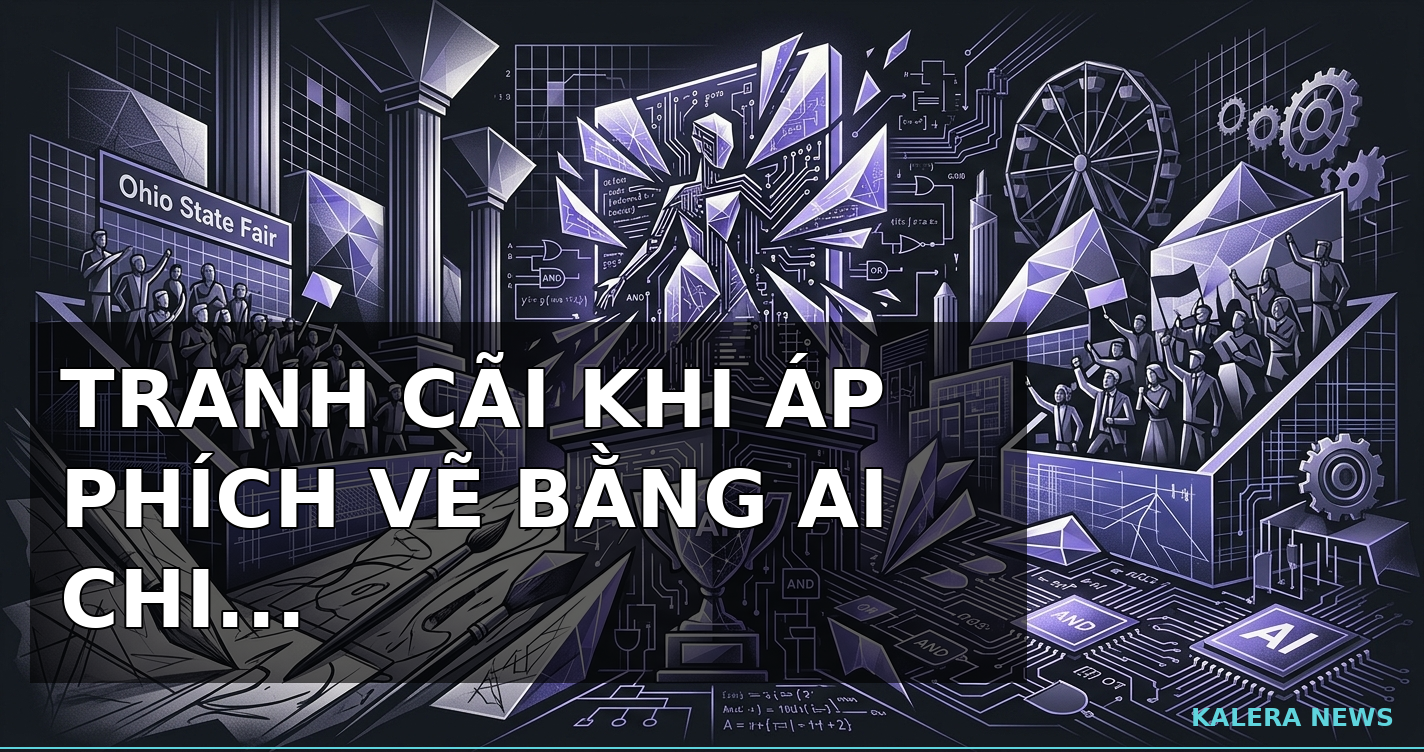
A poster design created using artificial intelligence (AI) technology recently won first place in a design competition at the Ohio State Fair, sparking a wave of heated discussions within the creative community. The incident quickly drew significant attention on tech forums like Hacker News, once again raising questions about fairness and the true definition of art in the digital era.
Detailed Developments
Poster design competitions at state fairs have long been a traditional venue for local artists and graphic designers to showcase unique cultural identities. However, this year's results came as a major surprise when the judges awarded the top prize to a piece identified as being assisted or entirely generated by generative AI tools. This event immediately split the art community into two opposing viewpoints: one supporting the application of new technology, while the other fears it diminishes the value of traditional artists' labor, who spend years honing their manual skills.
Technical & Technological Analysis
Technologically, modern image generation models such as Midjourney, Stable Diffusion, and DALL-E 3 operate by analyzing billions of existing images to learn how to replicate styles, lighting, and compositions based on text prompts. Users do not need to paint every brushstroke directly; instead, they act as an art director, refining prompts and technical parameters to achieve the desired outcome. The rapid advancement of diffusion models has enabled AI-generated artwork to achieve extremely high levels of detail and aesthetics, making it difficult even for experienced judges to distinguish them from hand-drawn or traditional digital designs created using tools like Photoshop or Illustrator without in-depth verification methods.
Expert Opinions & Insights
Many tech experts and artists observe that the line between assistive tools and technological abuse is becoming increasingly blurred. Some commentators on tech forums argue that AI is merely a new tool, similar to how digital cameras were initially met with fierce opposition from portrait painters when they first emerged. Conversely, many art critics warn that allowing AI-generated works to compete on equal footing with manual creations without clear categorization is highly unfair, given the massive discrepancy in the time and effort required to complete a piece.
Impact & Future
The incident at the Ohio State Fair reflects an irreversible trend as AI weaves itself deeper into all creative fields. In the near future, art competition organizers will undoubtedly have to tighten regulations, requiring participants to be transparent about their creation process or establishing separate categories for AI art and traditional art. For the design community in Vietnam and globally, this is a clear signal that adapting and redefining the unique value of human intellect in the face of the creative automation wave is becoming more urgent than ever.