☑၀ Humanoid robots controlled by surgeons perform historic trial surgery
A preclinical trial has opened up prospects for using humanoid robots in remote surgery.
Sources arstechnica.com
A preclinical trial has opened up prospects for using humanoid robots in remote surgery.
A research on technology philosophy honors the value of human hands in the face of the wave of robotics and AI.
The YouTube channel 'I Build Stuff' has successfully built an autonomous flying umbrella using drone technology that automatically follows users to shield them from rain and sun.
The premium Matic robot vacuum is raising its retail price from $1,245 to $1,495 starting September 9, reflecting ongoing production costs and technological advancements.
Boston Dynamics has partnered with Hyundai Global to host a recruitment and deep-tech sharing event focusing on Atlas, AI, and the future of mobility.
Hyundai Motor Group has announced a large-scale recruitment program for AI and robotics engineers to shape the future of smart mobility.
MIT has developed muscle fibers that mimic human muscles, using charged fluids and AI-controlled micropumps for flexible contraction and extension.
This week's Video Friday from IEEE Spectrum highlights the Argus omnidirectional robot, Atlas's soccer skills, and sustainable solutions like the Eco-Score for robotics.
The collaboration between Boston Dynamics and Google DeepMind brings the Gemini Robotics-ER 1.6 model to the Spot robot, unlocking autonomous decision-making capabilities during industrial patrols.
Studies on arXiv propose solutions for sim-to-real transfer, off-policy optimization, and opponent behavior shaping in multi-agent environments.
Jim Fan (NVIDIA) has announced the open-sourcing of CaP-X, an agent framework that enables robots to self-synthesize skills and interact with the physical world through perception and actuation APIs.
The partnership between Google DeepMind and Boston Dynamics enables the Spot robot to better understand its environment and execute complex commands, powered by the Gemini model.
Meta's Chief AI Scientist predicts that AI will soon be able to learn from videos to build hierarchical world models, helping robots plan complex actions in the real world.
A new series of studies on AI agents focuses on physical feasibility (BrickAnything) and maintaining long-term system performance.
Hugging Face is participating in the AI Week LeRobot event, marking its strong presence in the open-source robotics sector. The event features experts such as Steven Palma Morera.
From ROS to Hugging Face's LeRobot and Nvidia's GR00T, open-source software is lowering the barriers to entry in robotics, empowering robots with the ability to reason and make decisions.
NVIDIA's Cosmos 3 has secured the #1 spot in both Text-to-Image and Image-to-Video categories on the Artificial Analysis leaderboards. It is a family of omnimodal world models for Physical AI, unifying language, image, video, audio, and action.
A robotics startup is under legal fire for allegedly using Airbnb rentals as unauthorized testing grounds for its robots, causing property damage.
NVIDIA Cosmos 3 is a unified world model capable of understanding and generating language, images, video, audio, and actions for robotics.
NVIDIA has achieved a breakthrough in computer vision, speeding up bounding box detection by 10x by eliminating a traditionally mandatory step in VLM grounding.
NVIDIA announced the new Isaac Gr00t reference design humanoid robot platform that combines humanoid robot, five-fingered hands and NVIDIA Jetson Thor compute.
OpenAI is rebuilding its robotics team after a five-year hiatus. Instead of focusing on specific robot hardware, the company aims to develop foundation models for robots, enabling them to perform any task according to user needs.
Research highlights that world models for embodied AI must be based on real physical structures rather than just predicting images, in order to avoid dangerous misbehaviors.
Sam Altman has announced that OpenAI is recruiting full-stack hardware, operations, systems, and ML engineers for its Robotics division. The goal is to develop socially beneficial robots in the physical world.
NVIDIA's research team has announced LocateAnything, a new vision-language model that redefines bounding box prediction. This is a major breakthrough that enables AI agents and robots to not only 'see' but also localize objects at lightning speed for precise action.
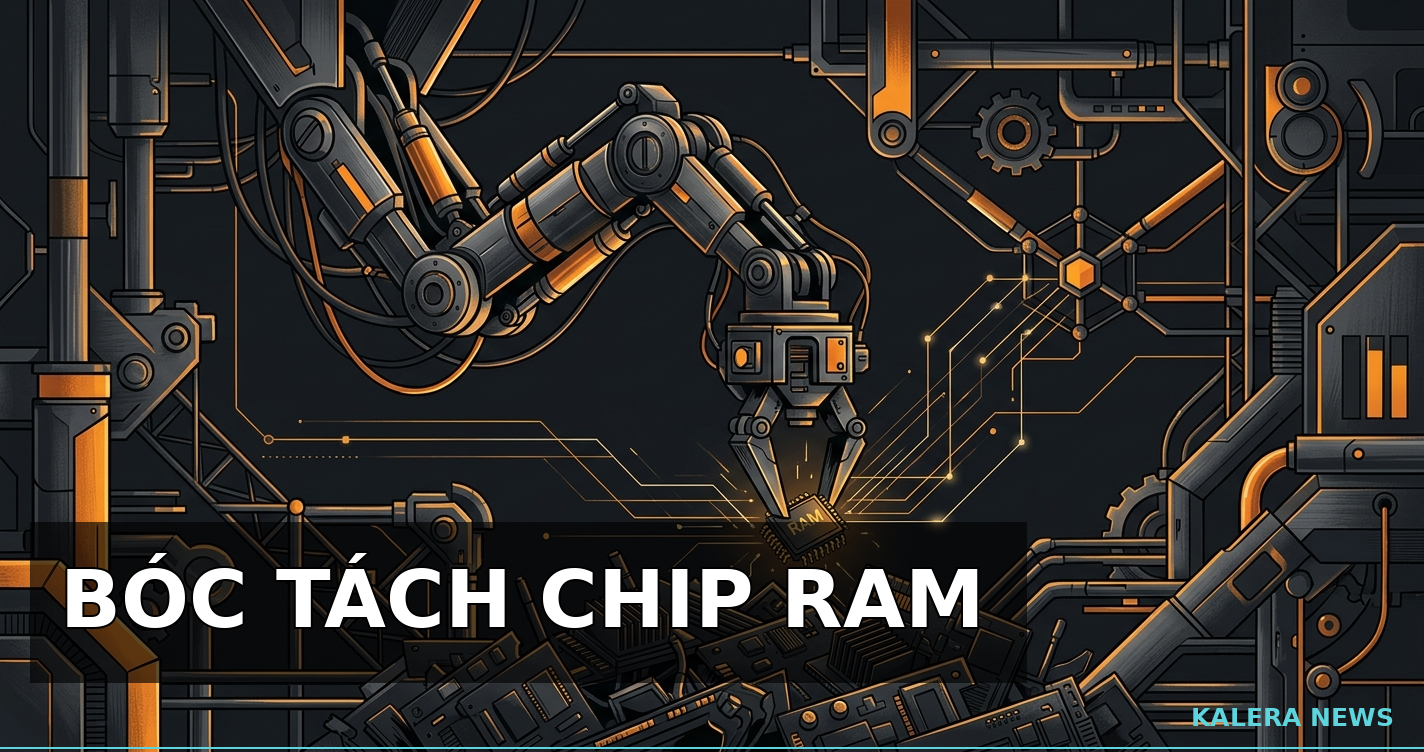
Startup Tuurny has introduced the Nantul robotic system, which can automatically identify and salvage intact RAM chips from old circuit boards for reuse.
Professor Maja Matarić has been honored for her pioneering contributions to socially assistive robotics, particularly in psychological therapy for students and autistic children.
As robots gradually enter our homes, experts are locked in intense debates over the new ISO 13482 safety standard and the practicality of humanoid designs.
Startup DAIMON Robotics has announced Daimon-Infinity, the world's largest multimodal tactile dataset, aiming to bring a sensitive sense of touch to robots.
Boston Dynamics demonstrates Atlas using reinforcement learning to carry heavy objects; Unitree G1 responds to real-time voice commands; and a new lineup of industrial robots debuts at GTC 2026.
Wetour Robotics introduces Spatial Intent Fusion, a solution combining spatial, visual, and gesture data to control physical devices with under-100ms latency.
At the Physical AI Hackathon, the 'Panda Master' project made an impression by combining the ReachyMini robot, a GPT model, and an Agilex robotic arm to converse with users and draw 'fortunes' for them.
Boston Dynamics has launched the "School of Football" project, using soccer to train the balance and agility of its next-generation Atlas robot.
NVIDIA GTC week officially begins in Taipei with the 'Meet-a-Claw' event, where developers can get hands-on experience with next-generation autonomous AI agents.
Hugging Face has announced the LeRobot project, enabling users to build their own humanoid robots for around $2,500 using a complete open-source toolkit.
Reachy Mini is a new desktop robot from Hugging Face featuring a powerful programming ecosystem, supporting agentic programming and a stable IDE environment for both professionals and children.
Through insights shared by its product managers, Boston Dynamics highlights its focus on combining practical solutions with bold research to develop the next generation of robots.
Boston Dynamics has released a guide on applying robotics and AI to optimize operations, mitigate risks, and accelerate incident response times in industrial settings.
Hyundai Motor Group has confirmed plans to bring its robotics technology, along with Boston Dynamics, to the world's biggest football tournament, the 2026 FIFA World Cup.
Boston Dynamics has shared the inspiring story of Dayme Delgado, a female field application engineer who thrived through the company's mentorship program.
Boston Dynamics has been named one of the most innovative companies of 2026 by Fast Company, recognizing over 30 years of enduring contributions to the robotics industry.
Boston Dynamics has fully transitioned to rotary actuators instead of mimicking the human musculoskeletal system, marking a major design turning point.
Boston Dynamics has released a guide on using autonomous robots for routine inspections in food and beverage (F&B) manufacturing plants.
Boston Dynamics has released a deployment guide for autonomous mobile robots (AMRs) to optimize inspection and maintenance workflows in food and beverage plants.
Boston Dynamics' humanoid robot Atlas can now lift heavy objects weighing over 100 lbs (45 kg) by coordinating its entire body to adapt to shifting loads.
The humanoid robot Reachy surprised audiences by participating in a mini rap battle at the AI Dot Engineer Singapore event, demonstrating the intersection of robotics and culture.
NVIDIA shares a workflow for fine-tuning the 2-billion-parameter Cosmos Predict 2.5 world model to generate realistic robotic videos without consuming excessive resources.
Reachy Mini, a new open-source robot developed by Pollen Robotics in collaboration with Hugging Face, has completed assembly and is ready for real-world deployment.